Knowing how to clean concrete floors in Kannapolis, NC starts with reading your slab correctly, since Carolina humidity and heavy spring pollen build up differently on sealed, polished, and bare concrete. Use the wrong cleaner on the wrong surface and you risk etching the finish, trapping stains, or making a sealer fail early. This guide walks through the exact schedule, tools, and stain fixes for garages, basements, and polished interior floors.
How Often Should You Clean Concrete Floors?
Most concrete floors need a quick sweep and damp mop weekly, with a deeper scrub every three to six months. Garages and high-traffic areas need attention more often. Sealed interior floors in low-traffic rooms can usually go longer between cleanings.
A mudroom or garage floor tracks in more grit than a finished basement rec room, so the schedule should match the room. Below are the two routines most homes in the area actually need.
Daily and Weekly Maintenance Routine
High-traffic rooms benefit from a quick daily sweep or vacuum to catch grit before it scratches the surface. Once a week, follow up with a damp mop and a pH-neutral cleaner. Dry the floor with a microfiber towel afterward to prevent streaking. Lower-traffic spaces, like a finished basement or formal living area, can often stretch this weekly routine to every other week without much change in appearance.
Seasonal Deep Cleaning
Routine mopping lifts surface dust, but it doesn't always clear cleaner residue or ground-in soil that builds up in the pores of the concrete over time. A seasonal deep clean every three to six months addresses that buildup before it dulls the finish. On garage slabs we service around Kannapolis, pollen cakes into unsealed concrete fast during a heavy spring bloom, so a deep clean in late April catches what a weekly mop misses. Watch for a hazy film across the surface or grit that reappears within a day of mopping. Both are signs it's time for more than a quick pass.
Know Your Floor: Understanding Surface Finishes
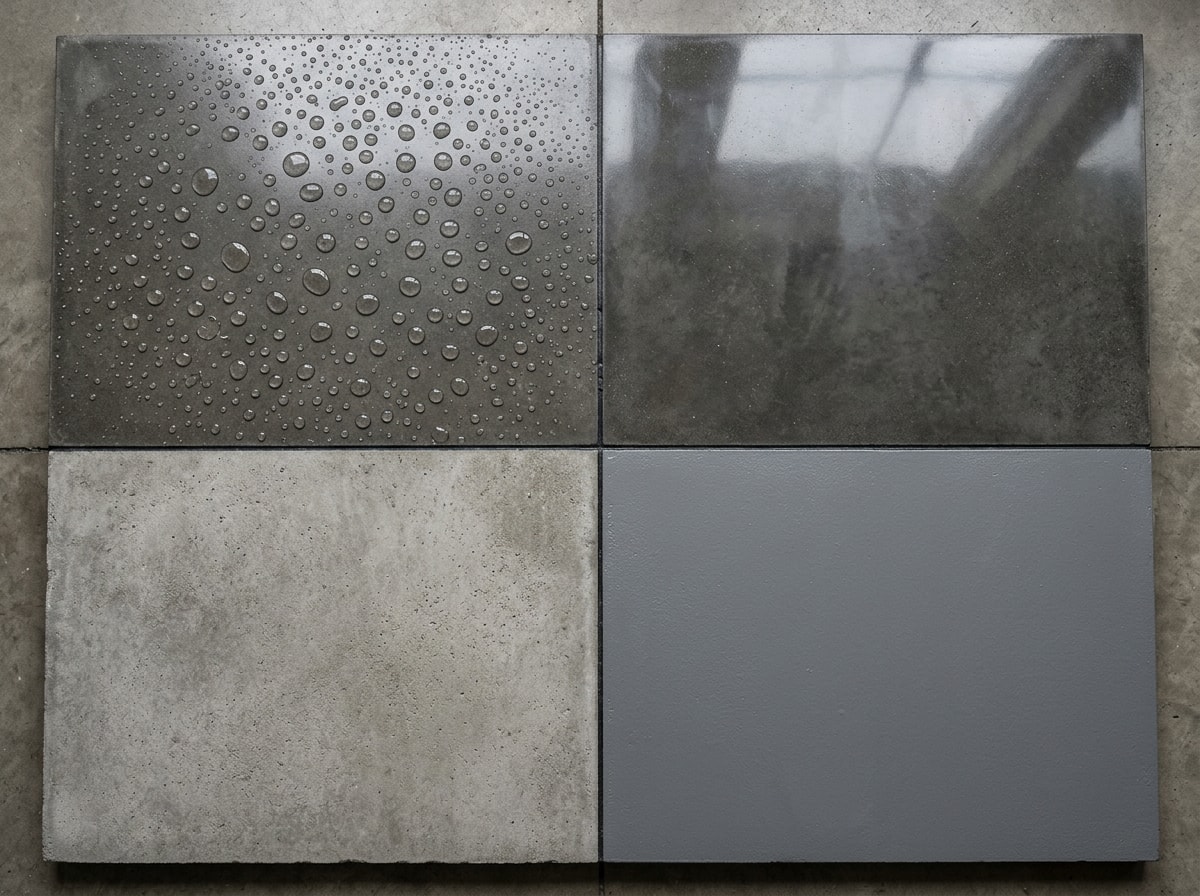
You can tell sealed or polished concrete from unsealed concrete with a simple water test. Drop a few tablespoons of water on the surface. If it beads up and sits there, the floor is sealed. If it soaks in and darkens the concrete, you're dealing with a more porous, unsealed surface.
This distinction matters because sealed and unsealed concrete respond very differently to moisture and cleaning products. A polished or sealed slab can handle a damp mop without much risk. Unsealed concrete absorbs liquid, including cleaners, straight into the slab. That absorption can trap residue or promote staining.
| Floor Type | Appearance | Water Test Result | Safe Cleaner Type |
|---|---|---|---|
| Sealed concrete | Slight sheen, smooth to the touch | Beads up and sits on the surface | Diluted pH-neutral cleaner |
| Unsealed concrete | Matte, slightly dusty texture | Soaks in and darkens quickly | Mild soap and water, used sparingly |
| Polished concrete | High gloss, reflective finish | Beads up tightly, resists spreading | Polished-concrete-specific cleaner |
| Painted concrete | Solid color coat over the slab | Beads briefly, may seep at chips or seams | Dry dust mop, gentle weekly damp mop |
Sealers exist to block the pores in concrete and keep moisture and soil from working their way in. A commercial breathable sealer is a standard recommendation for protecting a concrete surface , which is one reason matching your cleaner to the finish on your floor matters more than most homeowners expect.
What Cleaners and Equipment Should You Use on Concrete Floors?
A short list of tools covers almost every concrete cleaning job for most homes, whether the slab is sealed or not:
- A soft-bristle broom or dust mop
- A microfiber mop and pads
- A pH-neutral cleaner, diluted according to label directions
- A stiff-bristle (non-metal) brush for garage stains
Skip ammonia, bleach, citrus-based cleaners, vinegar, and pine cleaners on sealed, polished, or painted floors. These are acidic or alkaline enough to etch concrete or strip a sealer over repeated use. If your slab needs more than routine cleaning, such as resealing or crack repair, the team at Ward Contracting Inc handles concrete and paving work throughout the Charlotte metro, including Kannapolis.
How to Clean Concrete Floors: Step-by-Step
- Sweep or vacuum the entire floor first to remove loose debris, since mopping over grit just grinds it into the surface.
- Mix a diluted pH-neutral cleaner following the product's label ratio. Concentrated solutions can leave a sticky film.
- Damp-mop in sections with a microfiber mop, working in manageable areas rather than the whole floor at once.
- Rinse the floor with clean water to lift leftover cleaner residue, then let it air dry fully before foot traffic or rugs return.
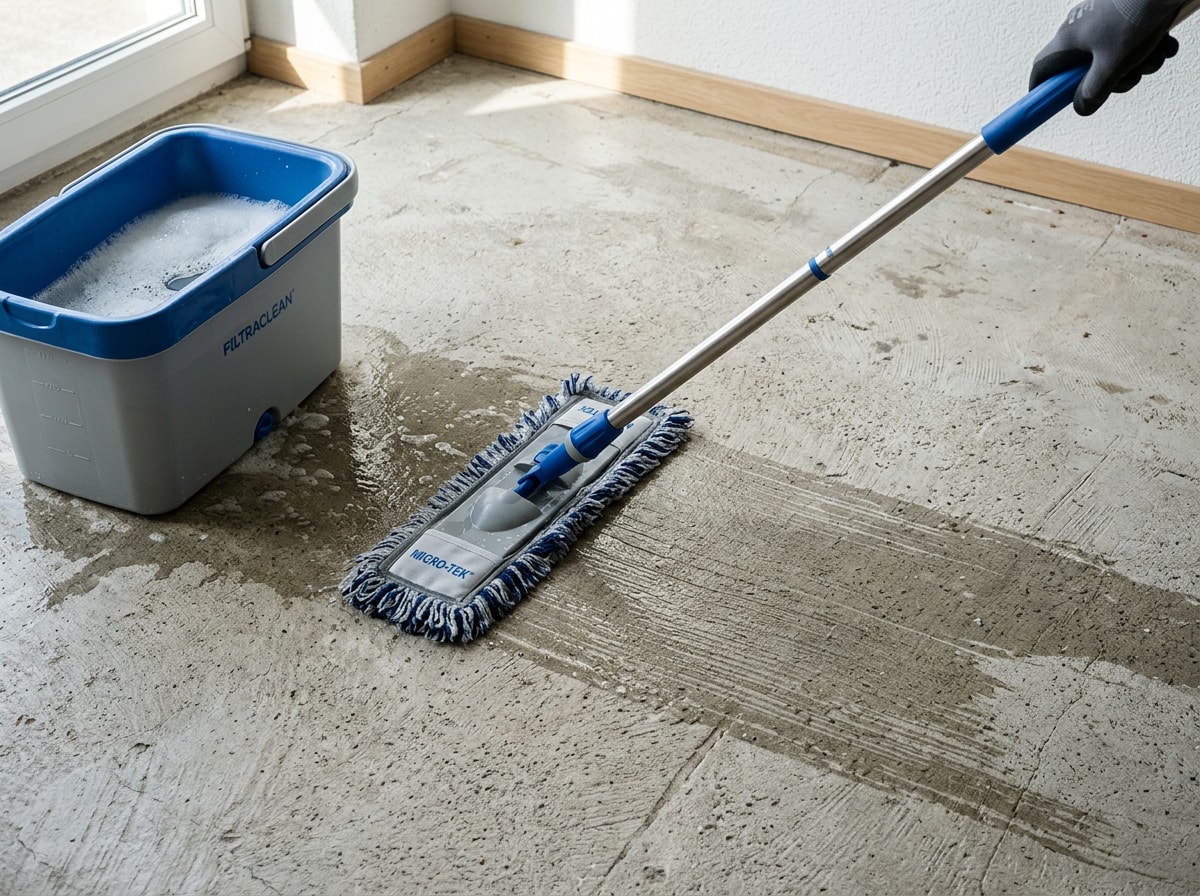
This sequence works for most interior slabs, sealed or not, and it's the fastest way to avoid streaking or haze.
How to Clean Concrete Garage Floors
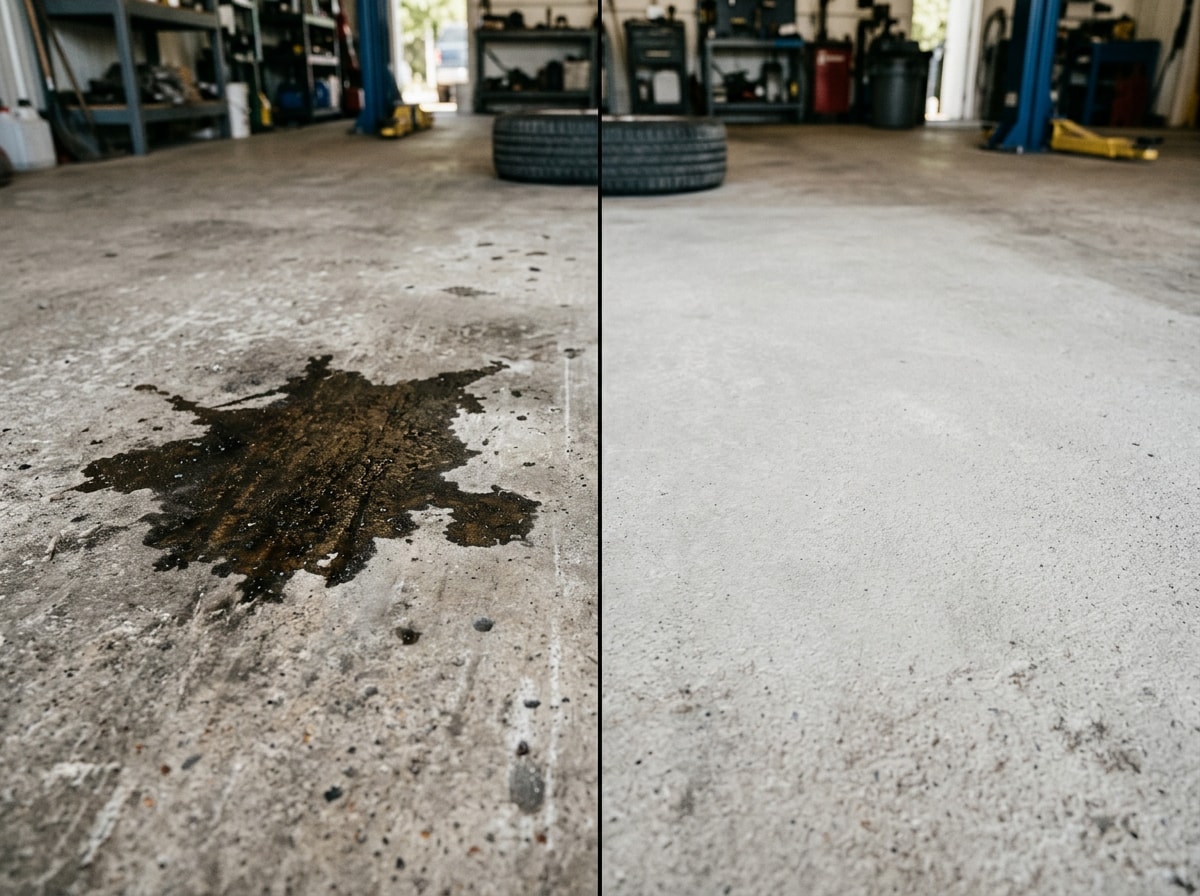
Garage floors collect gravel, dried mud, and the occasional oil drip, so they need a slightly tougher approach than interior rooms. Sweep or vacuum loose grit first. Treat fresh oil stains with cat litter or sawdust to absorb the liquid before it sets. For older stains, a concrete-safe degreaser and a stiff-bristle brush usually do the trick, followed by a thorough rinse. Local conditions around Kannapolis mean garages near wooded lots tend to collect more organic debris and pollen film than slabs in open subdivisions, so check those floors more often during spring.
How to Clean Concrete Basement Floors
Basements bring their own challenge: limited airflow and ongoing moisture concerns. Mix a mild detergent or pH-neutral cleaner, mop evenly across the floor, and make sure it dries completely before furniture or rugs go back down. Trapped moisture under either can invite mold. For a musty smell tied to pet accidents or organic buildup, an enzymatic cleaner breaks down odor-causing residue more effectively than a standard mop-and-soap pass. If mold or mildew has already taken hold, a diluted white vinegar solution can lift it from bare, unsealed basement concrete, but it should not be used on sealed or coated floors.
How to Clean Interior Polished or Sealed Concrete Floors
Polished and sealed floors need a gentler hand than raw concrete. Dish soap or a mild floor cleaner, used with occasional damp mopping, is usually enough to maintain the finish. Look for a polished-concrete cleaner or pH-neutral product formulated to leave a thin, dirt-resistant film rather than a residue that dulls the shine. Avoid letting water pool on the surface, since even sealed concrete benefits from prompt drying. If your sealer is wearing thin, our waterproof concrete sealer guide for Kannapolis covers types, cost, and what reapplication involves.
How to Remove Stains From Concrete Floors
Treat stains before you mop the rest of the floor, not after. Mopping over a stain can spread it or push it deeper into porous concrete. For stubborn spots, a TSP-and-water solution or a paste of flour and hydrogen peroxide left to sit for several hours often lifts what a standard cleaner can't.
Unsealed concrete absorbs stains quickly, so prompt action matters more. Sealed concrete tends to hold stains closer to the surface, which usually makes them easier to treat once you get to them.
Degreasers and stronger cleaning agents can release fumes in an enclosed garage or basement. Sufficient ventilation (airflow) when using cleaning chemicals matters even for household-strength products, and you should never combine cleaners without checking labels first, since mixing cleaning products that contain bleach and ammonia can release dangerous gases that cause severe lung damage .
Regular Maintenance and Prevention
Sweeping regularly, using entry mats, wiping up spills promptly, and resealing on schedule do more for a concrete floor's long-term look than any single deep clean. Painted floors need a lighter touch than bare or sealed slabs: dry dust mopping or vacuuming works best for daily upkeep, since frequent damp mopping can cause peeling over time. Save damp mopping for once a week and dry the surface promptly afterward.
Want to see how we handle concrete work in practice? Browse our recent projects or request an estimate for a cleaning, sealing, or repair visit.
Frequently Asked Questions
Can You Use Vinegar to Clean Concrete Floors?
Diluted vinegar is generally fine on plain, unsealed exterior concrete. On sealed, polished, stained, or painted floors, the acid can etch or dull the finish, so it's best avoided there.
Can You Use a Pressure Washer to Clean Concrete Floors?
A pressure washer works well on unsealed garage or exterior concrete, but the wrong PSI or technique can etch the surface or force water into the slab. Lower settings and a fan tip reduce that risk. If you use an electric model, always plug a grounded pressure washer into a properly grounded receptacle to avoid shock hazards near wet concrete.
How Do You Deep Clean Concrete Tile Floors?
Concrete tile is different from a poured slab. Sweep or vacuum first, then use a targeted cleaner on the seams. Rinse thoroughly so cleaner doesn't sit in the grout lines and dry unevenly.
What Should You Never Use to Clean Concrete Floors?
Avoid ammonia, bleach, citrus cleaners, undiluted vinegar, and metal-bristle brushes, which can rust and stain the surface. Matching the cleaner to your floor's specific finish avoids most of these mistakes.
Can You Use Bleach on Concrete Floors?
Diluted bleach can disinfect plain, unsealed exterior concrete in small amounts, but it should never be mixed with ammonia-based cleaners. On sealed, polished, or painted indoor floors, bleach can discolor the finish, so a pH-neutral cleaner is the safer choice.
How Do You Get Mold or Mildew Off a Basement Concrete Floor?
Scrub the area with a diluted vinegar or mild detergent solution on bare, unsealed concrete, then rinse and dry the floor completely. Improving airflow and fixing any moisture source behind the mold keeps it from coming back.