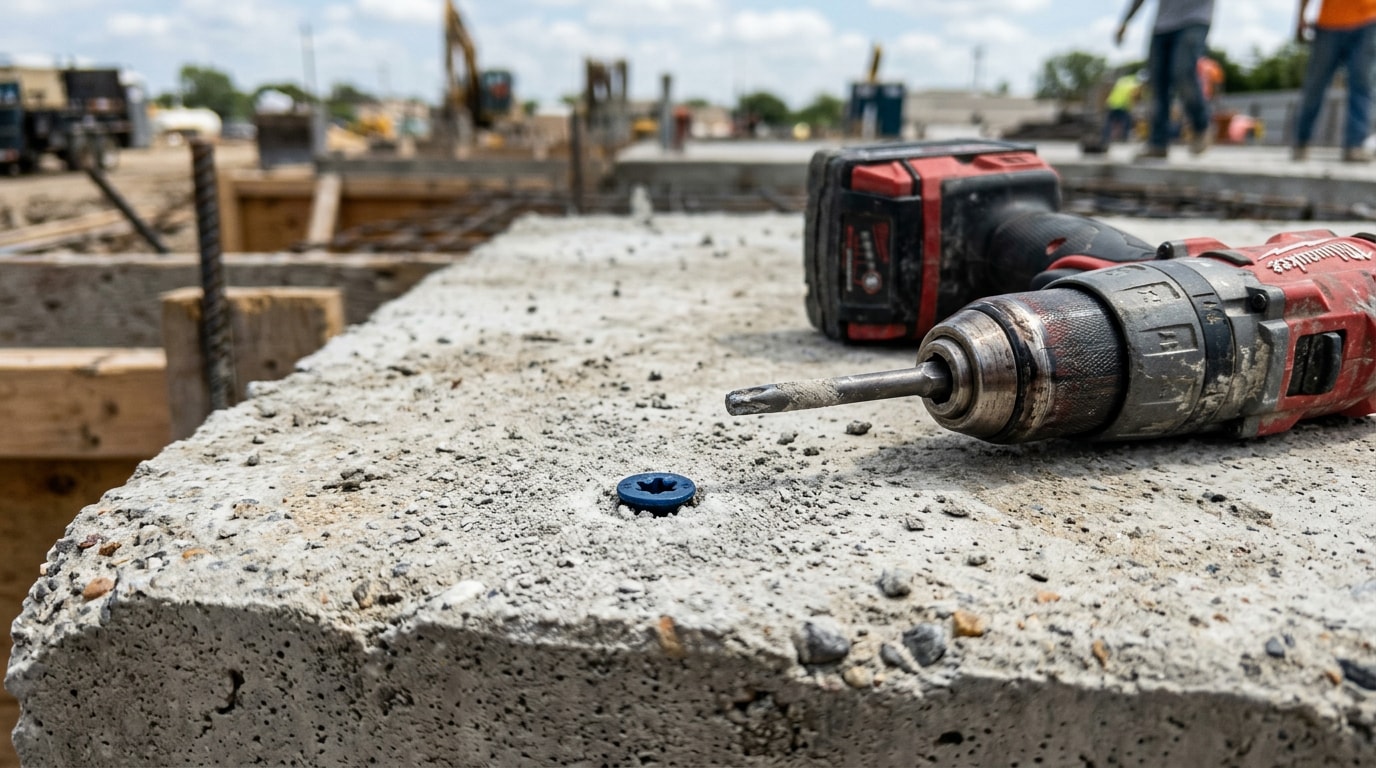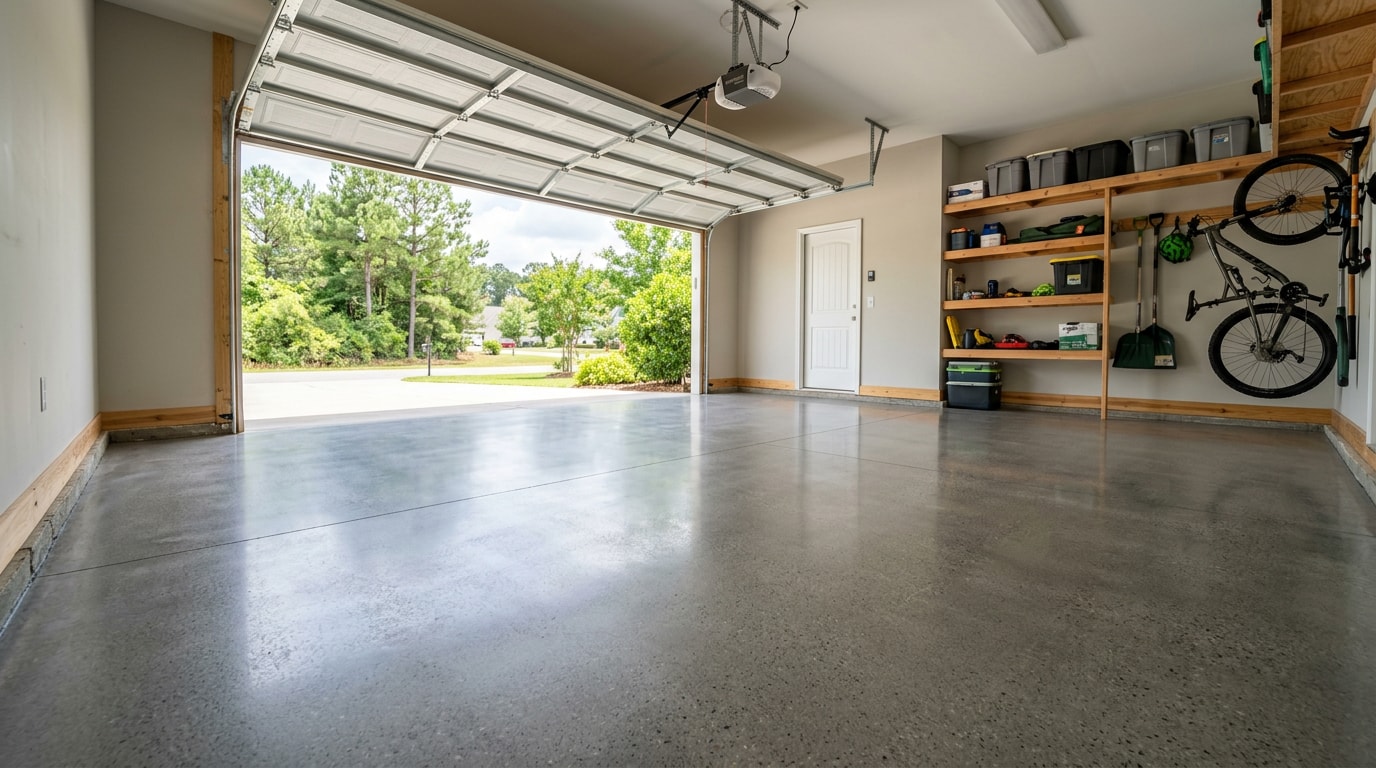
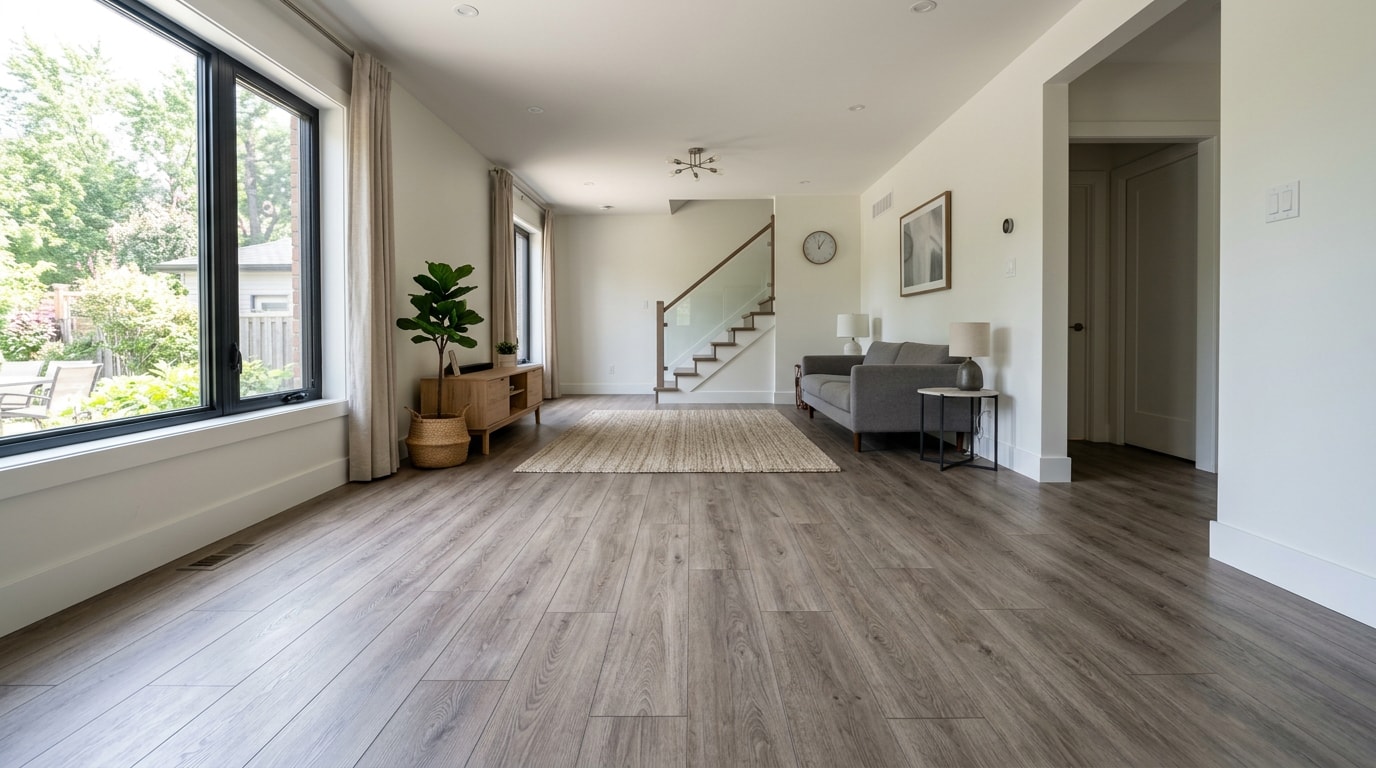
Concrete vinyl flooring in Troutman, NC works because most homes here sit on a slab-on-grade foundation, and vinyl plank is one of the few flooring types built to handle it directly. But concrete holds moisture long after it looks dry, and skipping the test is the fastest way to turn a weekend flooring project into a warranty claim. This guide covers the moisture testing, slab prep, and installation steps that separate a floor that lasts from one that doesn't.
Can You Install Vinyl Plank Flooring Over a Concrete Slab?
Yes. Vinyl plank is one of the best subfloor matches for a concrete slab because its waterproof core and thin profile let it float or glue directly to the surface without the special underlayment systems other flooring types need.
That doesn't mean you skip prep work. Concrete holds moisture, shifts slightly with temperature, and often has minor surface imperfections. Installers choose between two methods: floating click-lock planks that snap together without adhesive, or glue-down vinyl that bonds permanently to the slab. Both work well once the surface is properly tested and leveled.
One thing most flooring blogs skip: ASTM doesn't actually set pass or fail numbers for these tests. The standard describes how to run the test; the flooring manufacturer sets the acceptable threshold for their specific product and adhesive. That's why two installers can look at the same reading and make different calls, and why confirming the manufacturer's spec sheet matters more than any "industry rule of thumb."
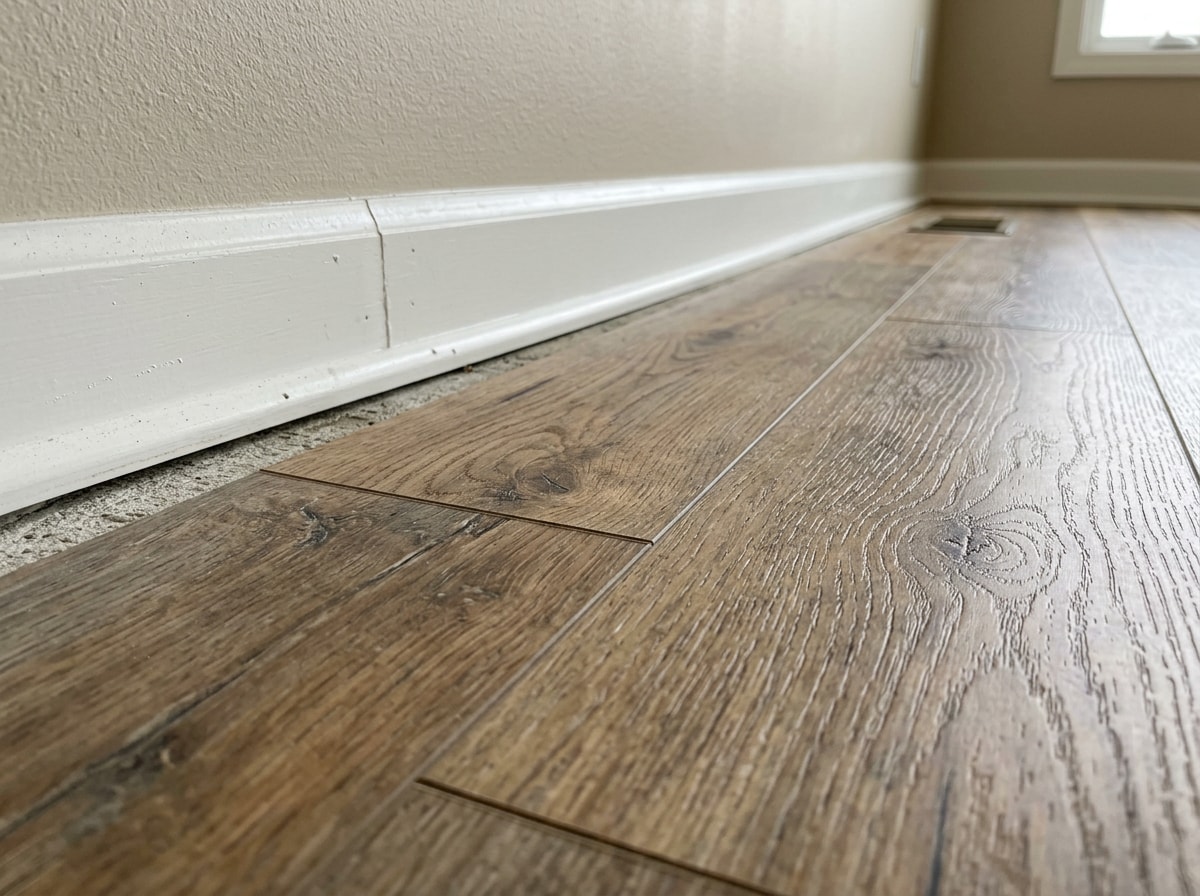
If you're already working with us on a concrete project in the area, take a look at our project gallery to see recent slab and paving work around Lake Norman.
Moisture Testing Before Installing Vinyl Over a Concrete Slab
Concrete can look and feel bone-dry on the surface while still releasing moisture vapor from deep within the slab. That's why moisture testing is the single most important step before any vinyl flooring installation begins.
In the Piedmont clay soils common around Iredell County, slab-on-grade homes are especially prone to trapped ground moisture pushing upward over time. We've opened up slabs on 20-plus-year-old Troutman homes that tested dry on the surface but still failed a relative humidity probe test once drilled a few inches down. That gap between "looks dry" and "tests dry" is exactly why skipping this step is the leading cause of adhesive failure and plank warping.
The two industry-standard methods are the calcium chloride test and the relative humidity probe test, both governed by ASTM standards and referenced throughout the NWFA's installation guidelines for flooring over concrete.
Calcium Chloride Test (MVER)
A calcium chloride test, governed by ASTM F1869, measures the moisture vapor emission rate (MVER) coming off the slab surface over roughly 60 to 72 hours. A small dish of calcium chloride is sealed to the concrete and weighed before and after testing.
Most vinyl flooring manufacturers want readings at or below 3 to 5 lbs per 1,000 square feet per 24 hours, though the exact number is set by the product manufacturer, not the ASTM standard itself. Readings above that threshold usually call for a vapor barrier or moisture mitigation product before installation moves forward.
Relative Humidity Test (RH Probe)
An RH probe is drilled into the slab to measure moisture conditions inside the concrete, not just at the surface. Most flooring manufacturers now consider this the more reliable test, since a slab can pass a surface calcium chloride test and still have moisture migrating up from deeper layers later.
Manufacturers commonly set acceptable thresholds somewhere between 75% and 90% relative humidity, though exact limits vary by product and adhesive system. Always confirm the specific number required for the vinyl you're installing before moving forward.
Concrete Floor Prep & Leveling
Before any plank touches the slab, the concrete needs a clean, flat surface to bond or float against. Standard prep work includes:
- Removing dust, old adhesive residue, paint, and leftover mortar from previous flooring
- Filling cracks with a concrete patching compound
- Checking the slab against a flatness tolerance, commonly cited around 3/16 inch over a 10-foot span per the NWFA's concrete subfloor guidelines
- Filling low spots with self-leveling compound
- Grinding down high spots or ridges until the surface is flush
Grinding and patching generate fine concrete dust. If you're hiring this out, ask whether the crew follows OSHA's respirable crystalline silica standard for dust control, since dry grinding without water or a HEPA vacuum attachment is both a code violation and a health hazard on an occupied job site.
These tolerances and products vary by manufacturer, so double-check the installation instructions for the specific vinyl plank you've chosen. Skipping this step is one of the fastest ways to end up with peaking seams or hollow-sounding spots after installation.
Step-by-Step: Installing Vinyl Plank Over Concrete
Once testing and prep are done, let planks acclimate in the room for 48 hours and plan your layout direction before opening a box.
Click-Lock Floating Installation
- Roll out a 6-mil poly vapor barrier if the manufacturer requires one.
- Lay the first row of planks along your starting wall.
- Click each plank's tongue-and-groove edge into the next, typically angled in and pressed down.
- Use a tapping block and rubber mallet to seat stubborn joints without damaging the edge.
Floating floors go down fast and don't require adhesive drying time, which makes them a popular DIY-friendly choice.
Glue-Down Installation
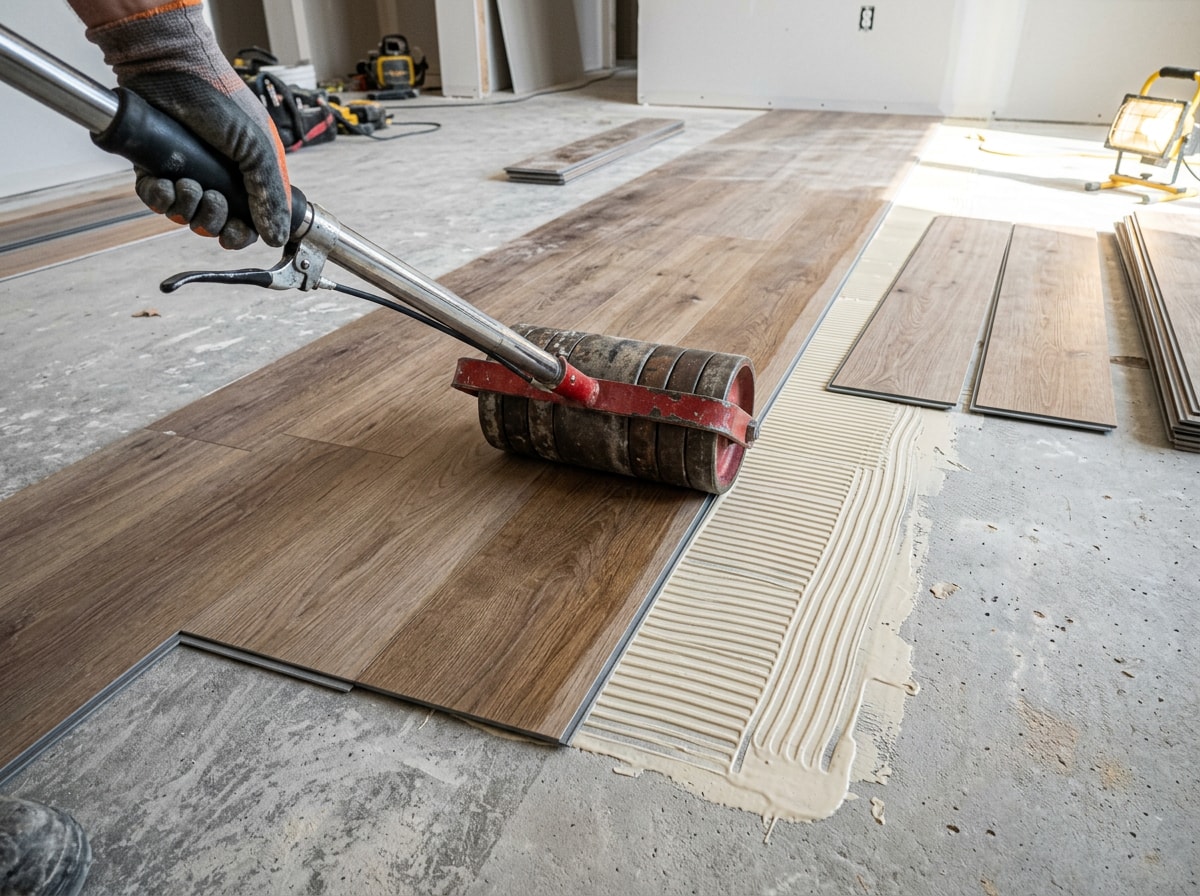
- Spread manufacturer-approved adhesive across a manageable section of slab using a notched trowel.
- Press planks into the wet adhesive within the product's open-time window.
- Work each plank into position before the adhesive sets.
- Roll the entire section with a weighted floor roller to force out trapped air and ensure full contact.
This method creates a more permanent, quieter floor that handles heavy foot traffic and furniture well.
Floating vs. Glue-Down vs. Loose-Lay: Which Fits Your Slab?
| Method | Upfront Cost | Skill Level | Permanence | Best For |
|---|---|---|---|---|
| Floating click-lock | Lower | Beginner-friendly | Removable | Rentals, basements, DIY projects |
| Glue-down | Higher | Requires experience | Permanent | Primary residences, heavy foot traffic |
| Loose-lay | Mid-range | Beginner-friendly | Reversible | Slightly uneven slabs, quick turnarounds |
Floating click-lock floors suit DIY projects and can be pulled up later, though they can sound slightly hollower underfoot. Glue-down vinyl costs more upfront and takes more skill, but creates a rock-solid, quiet floor that handles rolling furniture without shifting. Loose-lay sits between the two, using friction and weight rather than locking or adhesive, which makes it reversible but less forgiving on uneven slabs.
A rental unit or a basement you might renovate again benefits from a floating or loose-lay floor that's easy to remove. A primary residence where the floor is going in once and staying for 15-plus years is usually better served by glue-down vinyl. If you're also weighing concrete finish options for a garage or basement, our Troutman polished concrete garage floor guide breaks down an alternative worth comparing before you commit to vinyl.
Why Troutman Homeowners Hire a Local Concrete Pro for Slab Prep
DIY installation can work for a small room, but the slab underneath is where most floor failures actually start. I'm Bart Ward, owner of Ward Contracting Inc. My crews have spent years working concrete, grading, and paving jobs across the Troutman and greater Lake Norman area, including slabs in older homes with uneven pours and newer builds still inside their curing window. That hands-on experience with local soil and slab conditions is what a national flooring retailer's installer usually doesn't have.
A licensed, insured contractor also carries warranty coverage that DIY prep work doesn't, which matters if moisture issues or adhesive failures show up months after the floor goes down. If your slab needs leveling, crack repair, or a second opinion before flooring goes over it, request an estimate and we'll walk the space with you.
For homeowners outside Troutman, we also work throughout Mecklenburg County and the Greater Charlotte Area. You can see our full range of work on the homepage.
FAQ
Do I Need an Underlayment or Moisture Barrier for Vinyl Plank on Concrete?
It depends on the method. Floating vinyl plank often needs a 6-mil poly vapor barrier unless the planks already have an attached underlayment pad. Glue-down vinyl typically skips a separate barrier since some adhesives include moisture-resistant properties, though this depends on the specific product.
Can Vinyl Plank Flooring Go Over Cracked Concrete?
Small, stable shrinkage cracks can usually be filled with patching compound and ground smooth. Active or moving cracks need evaluation first, since they can telegraph through the vinyl over time. If you're unsure which type you're dealing with, have a contractor inspect it before flooring goes down.
How Long Should Concrete Cure Before Installing Vinyl Plank?
Most trade guidelines call for a minimum of 60 days of cure time before moisture testing, with many professionals recommending 60 to 90 days before flooring goes down on a standard slab. Installing too early, even if the surface feels dry, risks trapping moisture vapor beneath the vinyl and causing adhesive or plank failure later.
Can LVP Be Installed Over Existing Flooring (Tile, Old Vinyl)?
In most cases, yes. LVP can go over smooth, flat tile or old vinyl without issue since the new planks don't need to bond with the slab itself. It generally can't go over heavily textured tile, loose carpet tack strips, or uneven surfaces without additional leveling work first.
Do I Need a Professional for Moisture Testing, or Can I Test It Myself?
Calcium chloride kits are available for homeowners, but relative humidity probe testing requires drilling into the slab and calibrated equipment, which most DIYers don't have. If your reading is borderline, a professional test is worth the cost since a wrong call voids the flooring warranty.