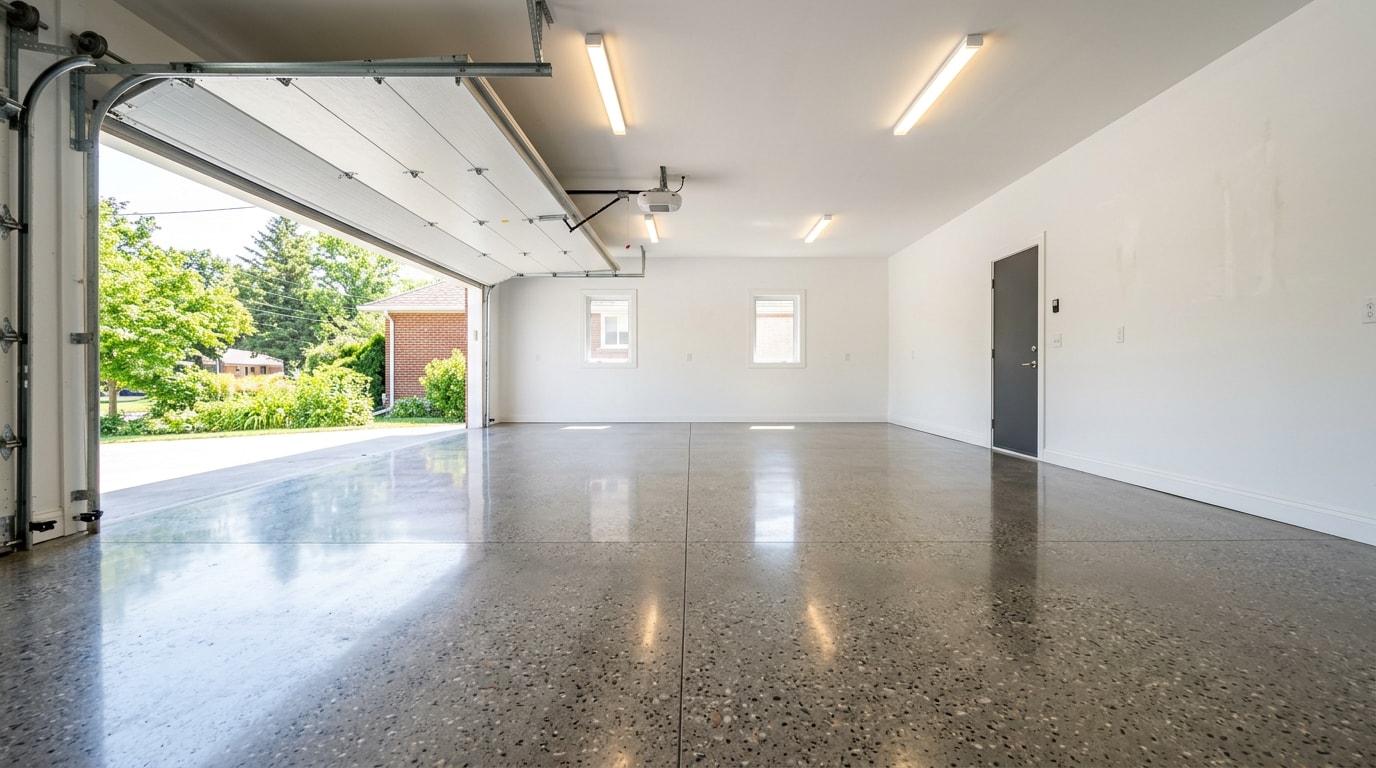
A polished concrete garage floor in Troutman, NC turns a dusty, stained slab into a surface that wipes clean and shrugs off daily vehicle traffic. It's one of the most requested garage upgrades across Iredell County, and it gets confused with epoxy coating more often than any other finish. Here's how to tell which one actually fits your slab before you request a quote.
Coating, Polishing, or Staining: Picking the Right Finish
Local concrete contractors handle a wide menu: driveways, patios, garage floor flatwork, decorative finishes, and floor coatings. Polishing sits inside that same lineup rather than standing apart from it.
Floor coatings, epoxy being the most common, are usually the first alternative homeowners mention when they ask about polishing. Both routes solve the same basic problem: a bare garage slab that's dusty, stained, or unfinished. Understanding how they differ is the real starting point before you call a contractor.
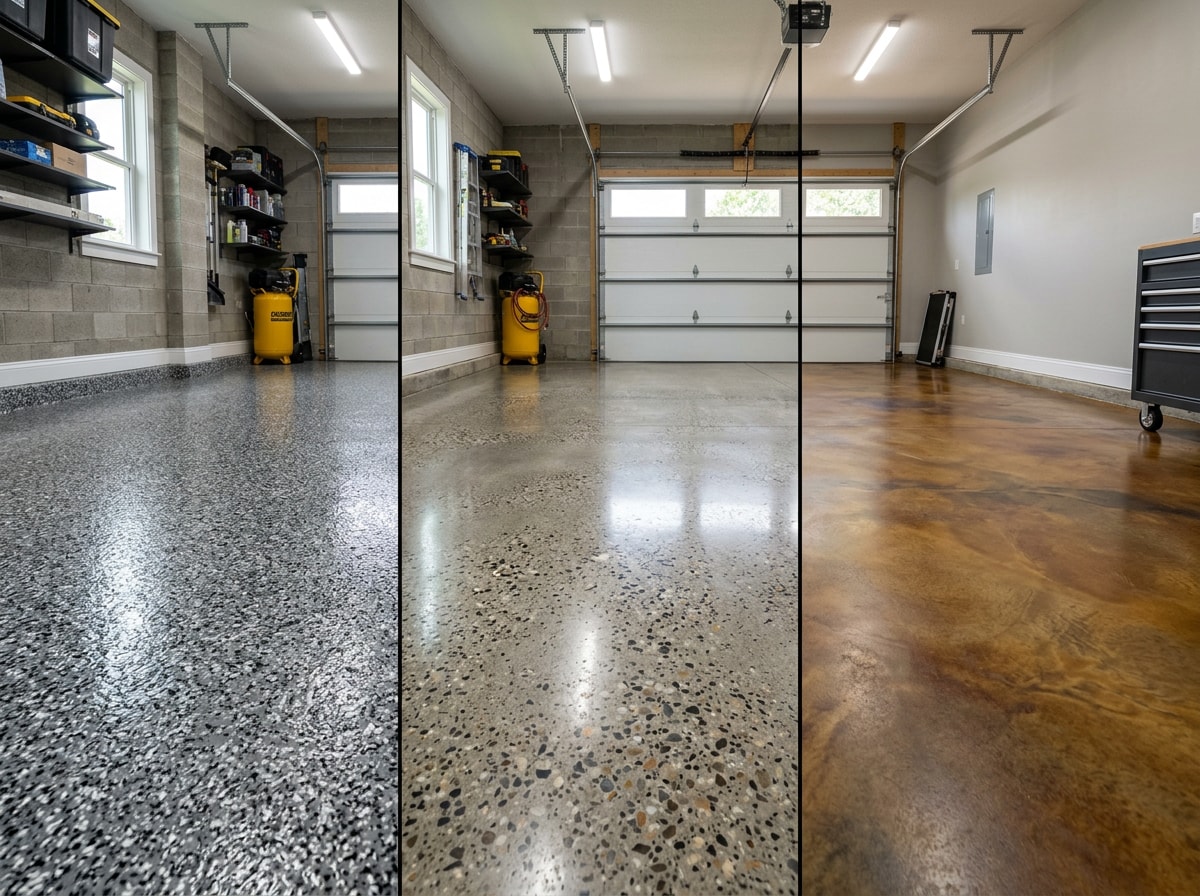
Coating adds a layer on top of the slab. Polishing refines the slab's own surface through progressive grinding. Staining adds color without changing the slab's texture at all. Each route suits a different starting point and a different goal.
| Route | What it does | Suits |
|---|---|---|
| Coating | Applies epoxy or polyaspartic over the slab | Slabs with surface damage, color-driven designs |
| Polishing | Grinds and densifies the existing concrete | Sound, reasonably flat slabs wanting a durable, low-maintenance finish |
| Staining | Adds color while keeping native texture | Decorative concrete projects where grinding isn't needed |
Polishing is worth pricing when the slab is structurally sound, free of major cracking, and reasonably flat, with none of the peeling or hot-tire pickup risk that coatings can carry over time.
Aggregate Exposure and Sheen: The Two Decisions That Shape the Floor
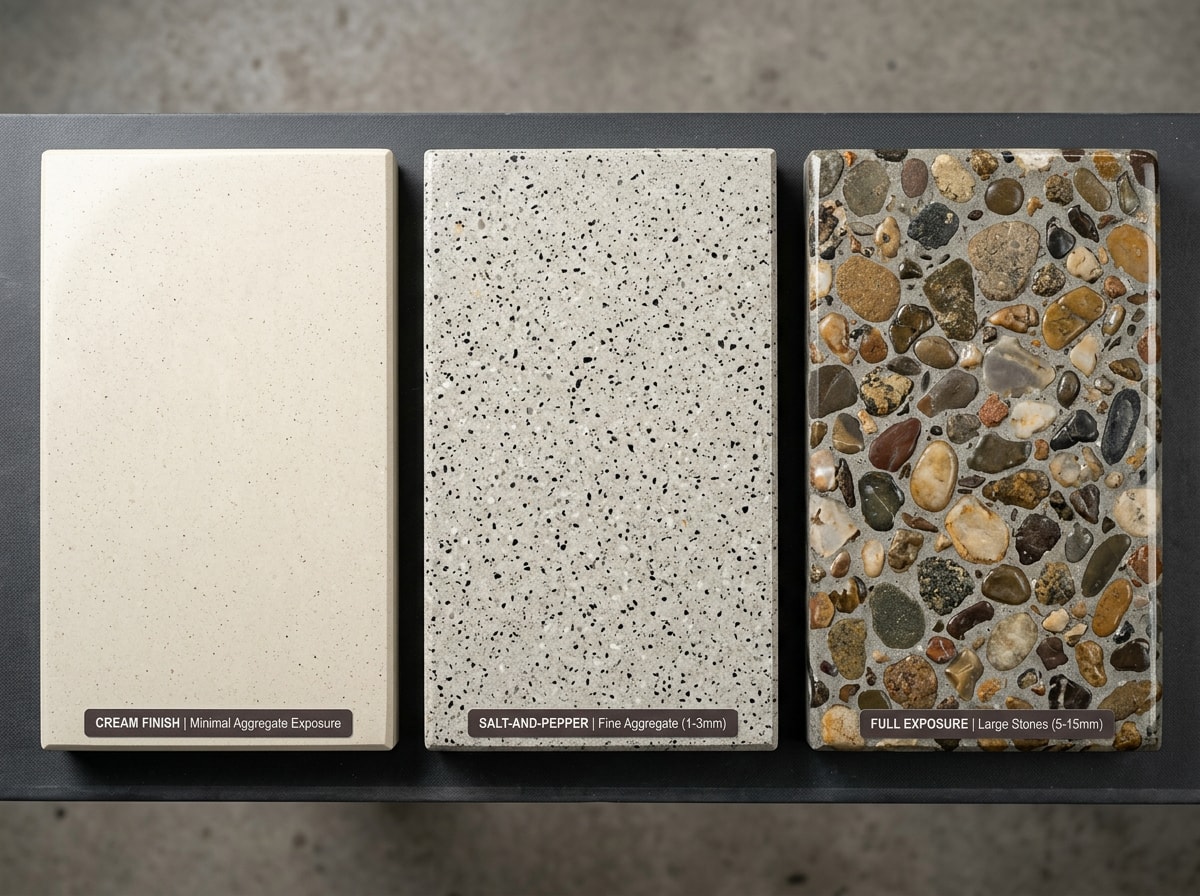
A polished floor comes down to two independent choices: how deep the first grinding cut goes, and how far the polishing sequence is carried afterward. Aggregate exposure sets what you see in the slab; sheen level sets how reflective the finished surface looks.
Exposure runs in three general bands. A cream finish keeps the surface layer mostly intact with almost no stone visible, and it needs the least grinding. A salt-and-pepper finish grinds slightly deeper, revealing small flecks of aggregate. Full aggregate exposure cuts the deepest, showing larger stone across the floor. The deeper the cut, the more labor and time the job takes, which is why full-exposure floors cost more than a cream finish on the same slab.
Sheen is a separate decision made during the final grit steps. A salt-and-pepper matte finish typically stops at the 200 to 400 grit range and suits garages and industrial floors, while a satin or honed look runs to about 800 grit, and a high-gloss "polished" finish continues through 1,500 and 3,000 grit . A lower sheen is often the smarter, and cheaper, pick on an older slab with imperfections to hide.
The sequence itself follows industry norms rather than guesswork. The Concrete Sawing & Drilling Association is a nonprofit trade association dedicated to promoting professional sawing, drilling, grinding, and polishing contractors through education and adherence to industry best practices , and its published guidelines are the closest thing the trade has to a shared standard for grit progression and finish quality.
Garages, Basements, Workshops, and Showrooms
A polished garage floor sweeps clean and doesn't trap dust the way bare concrete does, since there's no coating layer sitting on top to lift under a hot tire. That's the most common reason homeowners call.
A polished basement floor takes the process well too, but moisture rising through the slab should be checked first, as with any finish. A polished workshop floor handles daily tool carts and foot traffic with minimal upkeep. On a recent Troutman garage job, the slab looked rough from two decades of oil stains, but once the top layer was ground away, the aggregate underneath was sound enough for a salt-and-pepper polish with no patching required.
Epoxy or Polished Concrete: Which Is Better for a Garage?
Neither option is universally better. It depends on the slab and the look you want. Epoxy gives a chosen color or decorative pattern concrete can't produce alone. Polishing refines what's already there, so there's no layer to peel and no hot-tire pickup, but you get the concrete's natural character instead of a picked color.
| Factor | Epoxy coating | Polished concrete |
|---|---|---|
| Typical cost | Roughly $3 to $7 per sq ft, lower upfront | Roughly $3 to $10+ per sq ft, higher upfront |
| Lifespan | 5 to 10 years before recoat | 15+ years with periodic resealing |
| Appearance | Custom color/pattern | Natural stone character |
| Maintenance | Periodic recoating | Occasional resealing |
| Odor during install | Can be strong, needs ventilation | Minimal |
Those cost figures are general ranges, not a quote. Slab condition, square footage, and finish level all move the number, so get the slab looked at before budgeting. One factor worth weighing indoors: volatile organic compounds are compounds that have a high vapor pressure and low water solubility, and many are human-made chemicals used in the manufacture of paints , which is why some epoxy systems off-gas noticeably during and after application in an enclosed garage. Low-VOC formulas reduce this, but it's worth asking your installer which product they're using.
If the slab is sound and flat, price polishing alongside coating before deciding. Request an estimate and ask for both options quoted on the same visit so you're comparing real numbers, not guesses.
What a Polishing Project Looks Like
A typical project starts with an inspection of the existing slab, checking flatness, cracking, and any old coating. Prep work follows, grinding away contaminants, then the mechanical densifying and polishing sequence runs through progressively finer grits.
A fast early step: send photos of the floor, including a wide shot and close-ups of any cracks or patching, so a crew can tell quickly whether the slab is a good polishing candidate before scheduling a visit. You can start that process through Ward Contracting Inc or go straight to the contact page to request an estimate.
Cost and Permits for a Garage Floor Project in Troutman
Budget in rough terms: a cream finish generally runs toward the lower end of the polishing range, salt-and-pepper sits in the middle, and full aggregate exposure or a high-gloss sheen pushes the price up because of the extra grinding time. Resurfacing an existing slab typically doesn't require a permit, but new construction or structural work does.
There are five different zoning jurisdictions within Iredell County, and Mooresville, Statesville, Harmony, and Troutman all have their own zoning jurisdictions , so don't assume county rules automatically apply to a Troutman address. The Iredell County Building Standards Division issues permits for all contractor's trades, performs field inspection using North Carolina building codes, and does plan reviews for commercial projects . When a slab is part of new construction rather than a refinish, confirm requirements with the county's Building Standards Division before work starts.
See completed floor and flatwork projects in the area on the projects page, or check service coverage for Troutman, NC directly.
About the Author
This guide was written by Derek Ward, owner of Ward Contracting Inc, a licensed and insured contracting company serving Troutman and the greater Charlotte and Lake Norman region. Derek has managed concrete flatwork and floor-finishing crews on residential and commercial projects across Iredell and Mecklenburg counties for more than 15 years. Questions about a specific slab? Contact Ward Contracting Inc.
FAQ
Is Polished Concrete Good for a Garage Floor?
Yes, for most sound slabs. Polished concrete resists stains, cleans easily, and holds up under vehicle traffic, though a damaged or uneven slab needs repair first.
Can Any Concrete Floor Be Polished?
Not every slab qualifies. Soft, damaged concrete or a heavy existing coating can disqualify a floor, so get the slab condition checked early.
Is Coating or Polishing Better for a Shop Floor?
Shop floors face heavier loads and chemical exposure than a typical garage. Coating often suits chemical resistance needs, while polishing suits high-traffic durability with less downtime.
How Much Does a Polished Concrete Garage Floor Cost in Troutman, NC?
Most residential garage polishing jobs land somewhere between $3 and $10 per square foot, depending on exposure level and sheen. A full-aggregate, high-gloss finish on a damaged slab costs more than a cream finish on a clean one. A site visit gives you a firm number.
How Long Does Polished Concrete Last in a Garage?
A properly polished and periodically resealed garage floor commonly lasts 15 years or more, well past the typical 5 to 10 year recoat cycle for epoxy.
Do I Need a Permit to Coat or Polish a Garage Floor?
Generally no permit is required for resurfacing an existing slab alone, but new construction or structural concrete work does require one. Confirm with the Iredell County Building Standards Division before work begins, since Troutman has its own zoning jurisdiction separate from the rest of the county.