Shopping for a concrete blade in the Greater Charlotte Area, NC means choosing from a whole category of diamond blades, not one single product. Bond hardness, material, and your saw's horsepower all have to line up, or you'll burn through a blade in a single afternoon. This guide breaks down the blade types Charlotte crews actually reach for, corrects the bond-hardness rule most buyers get backwards, and tells you when it's smarter to hand the cut to a paving crew instead.
Types of Concrete & Diamond Blades for Charlotte Job Sites
There's no single product actually called a "concrete blade." It's a category of diamond blades built for different materials: cured concrete, green concrete, asphalt, and masonry each call for something different. Here's what you'll actually find matched to a job.
Asphalt & Green Concrete Blades
Green concrete and asphalt are soft but loaded with loose, uncured abrasive, and that abrasive eats away a soft metal bond in minutes. These blades need a harder bond so the matrix resists wearing away before it ever gets through the cut. The rule that governs everything: soft bond for hard material, hard bond for soft/abrasive material.
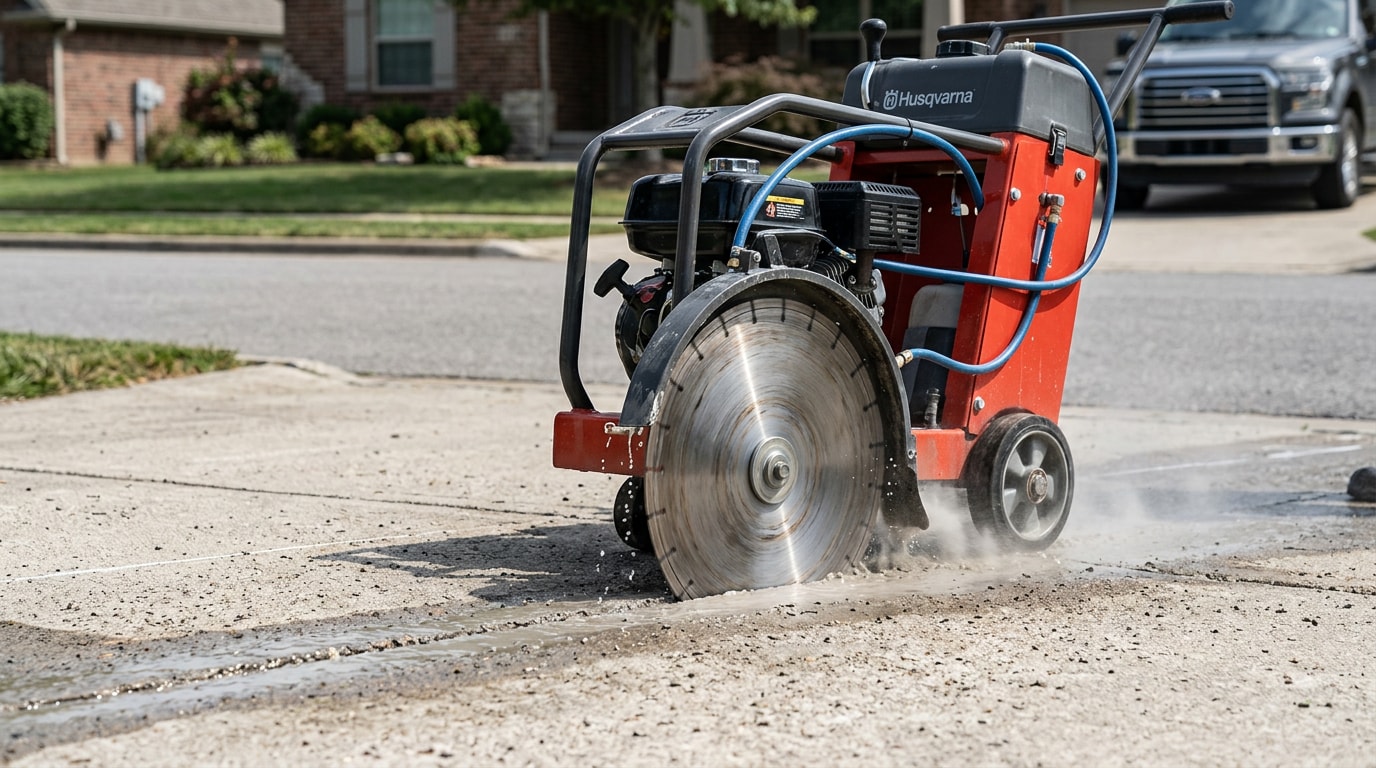
Contractors reach for this blade type when saw-cutting control joints within hours of a pour, or when cutting asphalt driveways and parking lots. Many of these blades run wet or dry, though wet cutting is strongly preferred for dust control on almost any job.
General-Purpose, Turbo-Segmented & Hard-Concrete/Masonry Blades
A general-purpose turbo-segmented blade is the workhorse most Charlotte contractors grab first. Its segmented rim with turbo-style gullets clears debris fast and handles a mix of concrete, block, and brick without constant swaps.
A dedicated hard-concrete or masonry blade uses a softer bond matched to dense, abrasive-but-hard local aggregate, letting the matrix wear away fast enough to keep exposing sharp diamond instead of glazing over.
HP rating matters as much as bond hardness. A blade rated for a 14-inch, high-HP saw won't cut safely on a smaller walk-behind saw, and an undersized arbor is its own hazard. Match blade diameter, arbor size, and HP range to your saw before you buy, not after the first cut goes wrong.
Bond Hardness Chart: How to Choose the Right Concrete Blade
Choosing a concrete blade comes down to three variables working together: bond hardness, material type, and your saw's HP and arbor match. Get one wrong and you'll burn through a blade fast, or damage the material you're cutting.
| Factor | Softer Bond Blade | Harder Bond Blade |
|---|---|---|
| Best material match | Hard, dense (cured concrete, hard aggregate) | Soft, abrasive (green concrete, asphalt) |
| Why it works | Wears fast enough to keep exposing fresh diamond against dense material | Resists abrasive wear so segments don't disappear in minutes |
| Typical Charlotte use case | Cured driveway or slab cutting, hard local aggregate mixes | Fresh control joints hours after a pour, asphalt driveways |
| Mismatch symptom | Used on soft/abrasive material: premature wear, segment loss | Used on hard/dense material: glazing, slow or stalled cutting |
Here's a real-world example. A cured, clay-set Charlotte driveway slab needs a softer-bond blade that keeps shedding worn diamond against dense aggregate instead of glazing over. A crew cutting control joints into a fresh pour that same afternoon needs the opposite: a harder bond that can stand up to loose, abrasive, uncured material without wearing away before the cut is done. Using one blade for both jobs is one of the fastest ways to waste money on diamond blades and stretch a schedule.
If you're also comparing surface-prep equipment for a Charlotte-area concrete project, our breakdown of concrete sprayer options in Cornelius, NC covers tools beyond blades alone.
How Diamond Blades Actually Cut Concrete
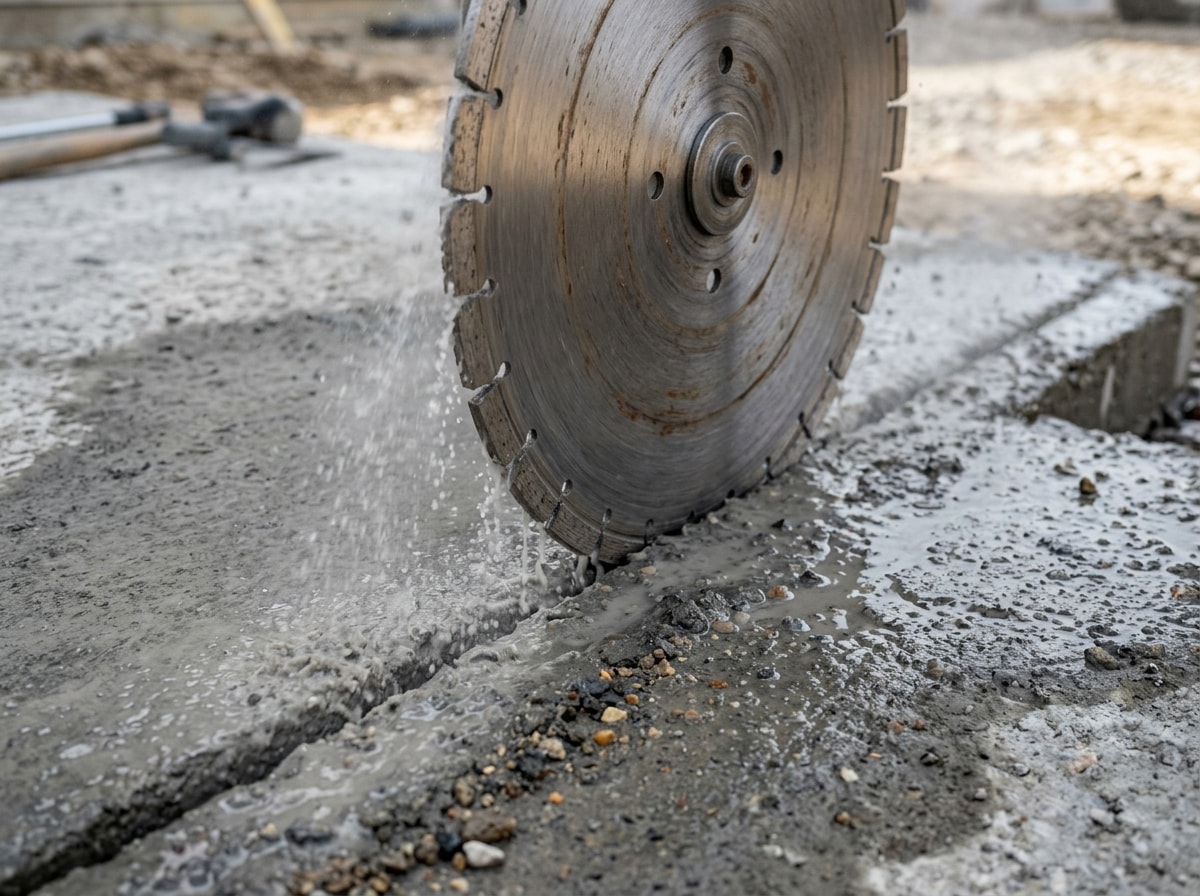
A diamond blade doesn't slice through concrete the way a saw blade cuts wood. It grinds. Industrial diamonds set in a metal bond abrade the concrete surface, and as that bond slowly erodes, fresh diamond is continuously exposed to keep the blade cutting.
The metal bond holds thousands of micro-diamonds in a matrix wrapped around the blade's steel core. As the blade spins, those diamonds abrade the concrete while the bond wears away at a controlled rate, fast enough to expose new diamond, slow enough that the blade doesn't fall apart mid-cut.
A bond too hard for the material glazes over instead of wearing properly, which stalls the cut almost entirely. A bond too soft wears away too fast, and the diamond layer disappears before its useful life is up. That's the exact mechanism behind the bond chart above.
Diamond Blade Troubleshooting: Glazing, Premature Wear & Segment Loss
Most blade problems trace back to a bond-hardness mismatch rather than a defective product.
- Glazing (a shiny blade that stops cutting efficiently): the bond is too hard for the material and isn't wearing fast enough to expose fresh diamond.
- Premature wear or rapid diamond loss: the bond is too soft for harder, more abrasive material.
- Segment loss (chunks of the diamond rim breaking away): often points to overheating from inadequate water flow or a blade binding in the cut.
Overheating raises safety concerns beyond blade life, too. Dry-cutting concrete generates respirable silica dust, and federal rules treat this as a serious jobsite hazard. OSHA's construction silica standard protects construction workers from respirable crystalline silica , and most contractors comply by following Table 1 engineering controls rather than running air monitoring on every task.
One detail worth knowing before you plan a cutting day: wet cutting outdoors for 4 hours or less needs no respirator at all under those Table 1 controls, as long as water is running continuously to the blade. For the full requirements that apply to Charlotte cutting crews, review OSHA's silica standard for construction.
NIOSH's guidance exists for the same reason. Its safe-work-practices page is built to prevent respirable crystalline silica (RCS) exposures and control dust whenever concrete, mortar, or stone is cut, ground, or drilled. You can read NIOSH's safe work practices for silica for the recommended controls by task. Matching the right blade and cutting method isn't only a performance question. It protects the crew standing next to the saw.
When to Buy a Blade vs. Hire a Charlotte Paving Crew
A one-off control joint or a small patch repair is often a reasonable DIY cut with a rented saw and the right blade. A full driveway, parking lot, or retaining-wall base cut is a different calculation.
Saw-cutting for driveway paving or parking lot paving has to account for sub-base conditions, drainage, and joint layout, not just blade selection. The same is true before retaining wall installation, where site preparation and base work determine whether the wall holds up through a Charlotte winter freeze-thaw cycle.
If a project involves asphalt milling or asphalt repair at scale, the labor and equipment cost of hiring it out usually beats buying, renting, and troubleshooting blades yourself. Request an estimate before you commit to a DIY cut on anything larger than a single joint or patch.
Concrete Blade Use Across the Greater Charlotte Area, NC
The Greater Charlotte Area has grown fast enough that cutting and paving demand has spread well past the city core. Charlotte gained 20,731 residents between 2024 and 2025, more than any city in the country , and metro Charlotte now has an estimated 2.8 million people . See the full 2025 population figures from the U.S. Census Bureau for the county-by-county breakdown.
That growth is exactly why concrete cutting and paving work keeps expanding into surrounding towns, not just downtown. We cover projects throughout:
- Mecklenburg County, NC
- Huntersville, NC
- Matthews, NC
- Pineville, NC
- Concord, NC
- Kannapolis, NC
- Gastonia, NC
- Troutman, NC
- Cornelius, NC
- Denver, NC
Browse the full Greater Charlotte Area, NC service area or check recent work on our projects page before deciding whether a job is a DIY cut or a call to a crew.
For garage or shop floors specifically, bond selection isn't the only decision that matters. Our guide to polished concrete garage floor options in Troutman, NC covers finish choices once the cutting and prep work is done.
Ward Contracting Inc.'s field team put this guide together from day-to-day paving and retaining wall work across the region, not from a parts catalog. If you'd rather hand off the cutting, prep, and finishing entirely, request an estimate and we'll scope the job before you buy a single blade. Learn more about our full range of work on the Ward Contracting Inc. homepage.
FAQ
What Is a Concrete Cutting Company?
A concrete cutting company is a specialty contractor that cuts, cores, and removes concrete using precision diamond-blade equipment rather than general demolition tools. These companies typically handle control-joint saw-cutting, wall openings, and core drilling, matching blade type to the material and structural conditions on each site.
Can You Cut Concrete With Rebar in It?
Yes. Specialized diamond blades use bonds and segment designs built to handle rebar, wire mesh, and even post-tension cable without failing, though cutting speed usually slows down when the blade reaches reinforcement.
Is Wet or Dry Cutting Better for Charlotte Job Sites?
Wet cutting is the default choice for most outdoor jobs. It controls silica dust, keeps the blade cooler, and reduces glazing. Dry cutting has its place for short, indoor, or utility-restricted cuts, but it requires dust collection equipment to stay within OSHA's silica limits.
How Long Does a Concrete Blade Last?
It depends entirely on bond-to-material match, not just blade price. A correctly matched blade on the right saw can cut hundreds of linear feet before needing replacement, while a mismatched bond can glaze over or shred apart within a single driveway.
Do Concrete Cutting Companies Provide Demolition Services?
Not usually in the same sense as heavy demolition. Concrete cutting is precision work done with diamond blades and core bits, while demolition relies on impact methods like breaking or hydraulic hammering to remove structures entirely.
What Is Diamond Sawcutting?
Diamond sawcutting is the process of using a diamond-tipped blade to grind through concrete, asphalt, or masonry in a controlled line or pattern, the same grinding mechanism described in the "How Diamond Blades Actually Cut Concrete" section above.