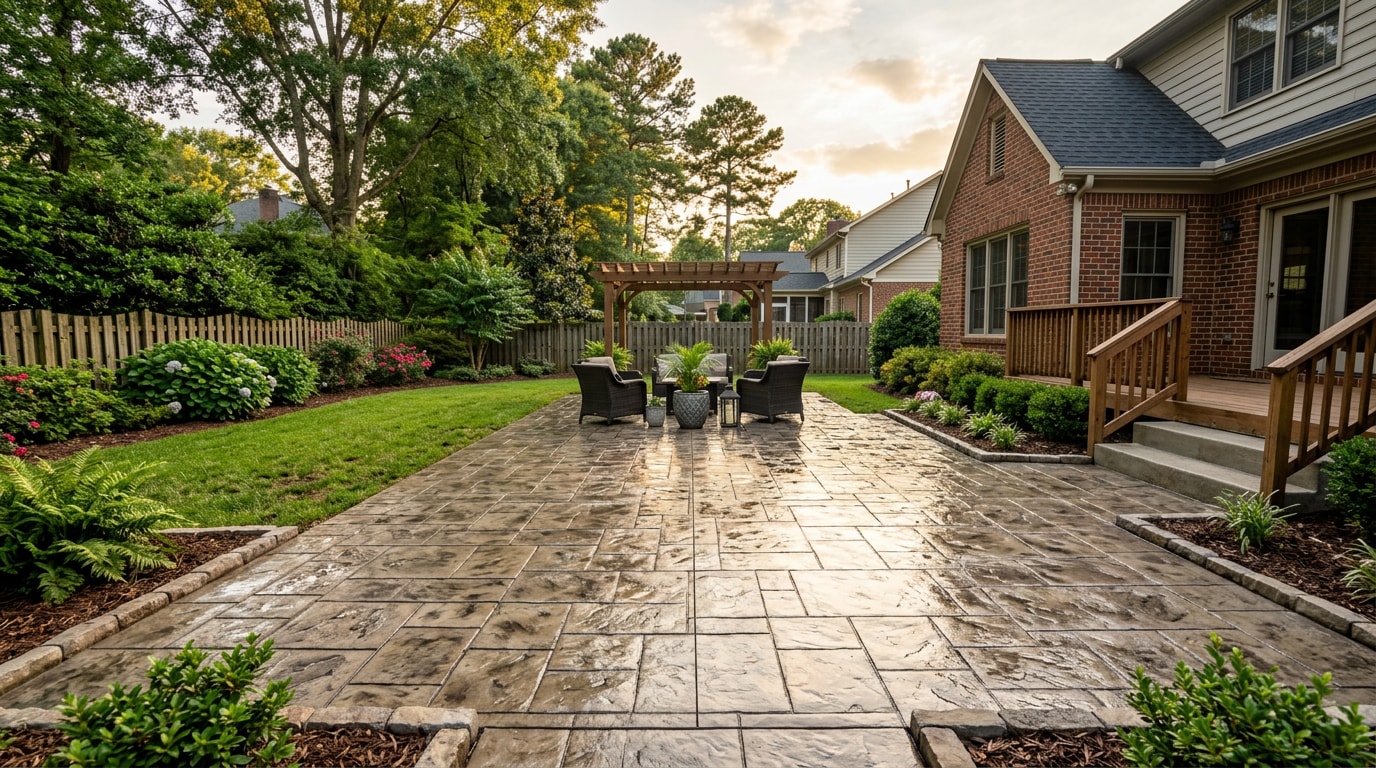
A stamped concrete sealer is what stands between your patio and the sun, rain, and foot traffic it takes on every day in Pineville, NC. Skip it, and the color hardeners and texture that made the surface attractive in the first place fade and wear within a season or two. This guide covers sealer types, how often resealing is actually needed, and the step-by-step process for getting it right.
Why Sealing Stamped Concrete Matters Here
Stamped concrete relies on color hardeners and release agents for its stone or brick look, and an unsealed surface loses that color fast under UV light and foot traffic. Sealing locks in pigment, resists stains, and adds a layer of surface durability that plain gray concrete doesn't need as urgently.
Pineville sits inside the Charlotte region's humid subtropical climate, where summer humidity regularly runs in the high 60s to low 70s percent. That combination of heat, UV exposure, and moisture is exactly why unsealed or under-sealed surfaces fade and wear faster here than in drier climates, according to NOAA's climate normals data for the region.
Crews that reseal driveways and patios across Mecklenburg County and the wider Charlotte metro area see the same failure pattern over and over: the jobs that go wrong almost always skipped the dry-time rule, not the sealer brand.
How Often Should You Reseal Stamped Concrete?
Most guidance lands on resealing stamped concrete every 2 to 3 years, and that's a reasonable default for a sunny, high-traffic driveway or patio in this climate. But the fixed-calendar number isn't the full story.
The American Society of Concrete Contractors' Decorative Concrete Council, in its 2025 best-practices note on sealing stamped concrete, makes a point most local guides leave out: resealing is the most common form of maintenance on stamped concrete, and reseals should be performed on an "as needed" basis rather than at a set number of years. Traffic, sun exposure, deicing chemicals, and sealer quality all move that window, sometimes shorter, sometimes longer than the "2 to 3 years" rule of thumb.
So check the surface instead of the calendar:
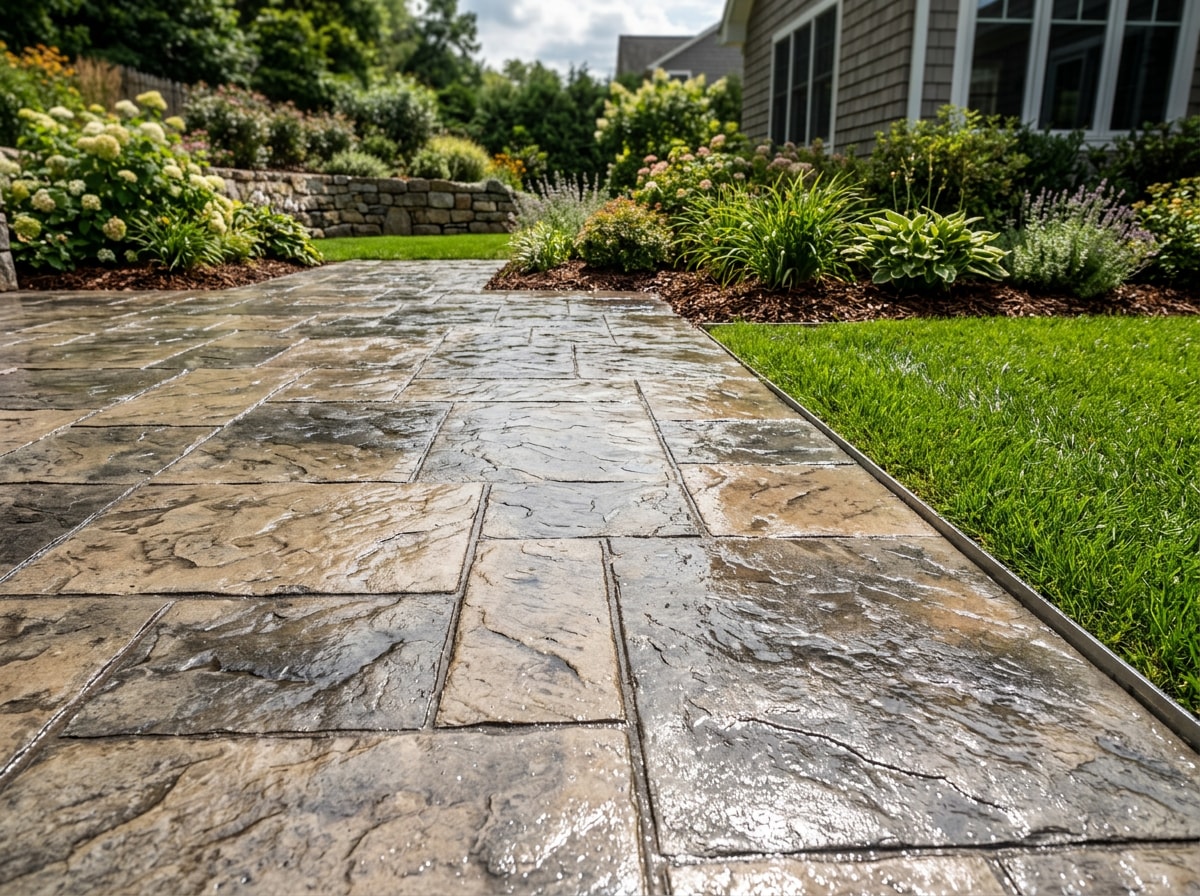
- Water-bead test — pour a little water on the surface. If it beads up, the sealer is still working. If it soaks in, the sealer has worn thin.
- Color check — a dull, chalky look is a reliable visual cue that UV exposure has broken down the sealer film.
- Surface feel — a sticky or tacky patch, or bare spots where the pattern shows raw concrete, both mean it's time.
Choosing the Right Sealer for Stamped Concrete
Most homeowners choose between a solvent-based acrylic sealer and a water-based sealer. Solvent-based versions tend to deliver a richer wet-look finish and stronger color enhancement, but they carry higher VOC content and a stronger odor during application. Water-based options are easier for DIY use, lower-odor, and line up better with tightening air-quality rules, though they often look slightly flatter.
Homeowners choosing a solvent-based product should know these coatings fall under the EPA's national VOC emission standards for architectural coatings, which caps how much VOC content manufacturers can put into the product sold in the US.
Characteristics of a High-Quality Sealer
A high-quality stamped concrete sealer should offer:
- UV resistance so color doesn't bleach out under direct sun
- Non-yellowing formula, especially important on lighter stamped colors
- Breathability so trapped moisture escapes instead of causing bubbles or haze
- Slip resistance (with a grit additive) for pool decks and entryways
| Sealer Type | UV Resistance | Gloss Level | VOC/Odor | Typical Recoat Interval | Cost |
|---|---|---|---|---|---|
| Solvent-based acrylic | Strong | High (wet-look) | Higher | 1 to 3 years | Mid |
| Water-based acrylic | Strong | Satin to low-sheen | Lower | 1 to 2 years | Mid |
| Penetrating sealer | Moderate | Natural/matte | Lower | Longer between recoats, no film to peel | Higher upfront |
How to Seal Stamped Concrete: Step by Step
Whether you're doing this yourself or hiring a crew, proper application follows the same sequence.
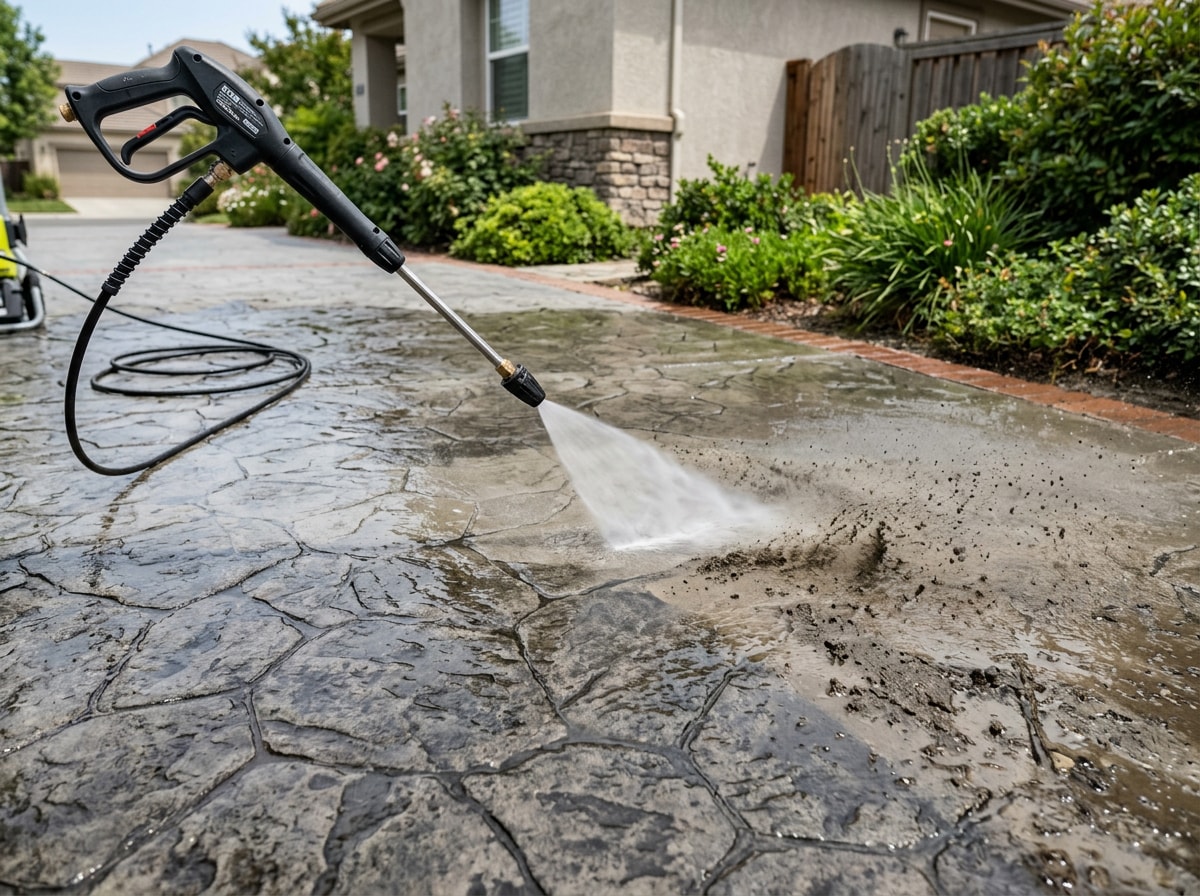
Step 1: Power Wash the Surface
Use a fan-tip nozzle held 12 to 18 inches from the surface. A turbo nozzle spins too aggressively and can strip or scar stamped detailing, so avoid it entirely on decorative concrete.
Step 2: Let It Dry Completely
Plan on a full 24-hour dry window, ideally with air and surface temperatures between 50 and 80°F. Skipping this risks trapped moisture that causes white haze or bubbling under the new coat. Spring and fall tend to be the easiest windows to hit those conditions in this region, ahead of peak summer humidity.
Step 3: Broadcast 00 Sand (Optional, Recommended for Traffic Areas)
Broadcasting fine 00 silica sand into the wet sealer coat adds texture and traction. This step matters most on pool decks, steps, and entryways where wet feet are common.
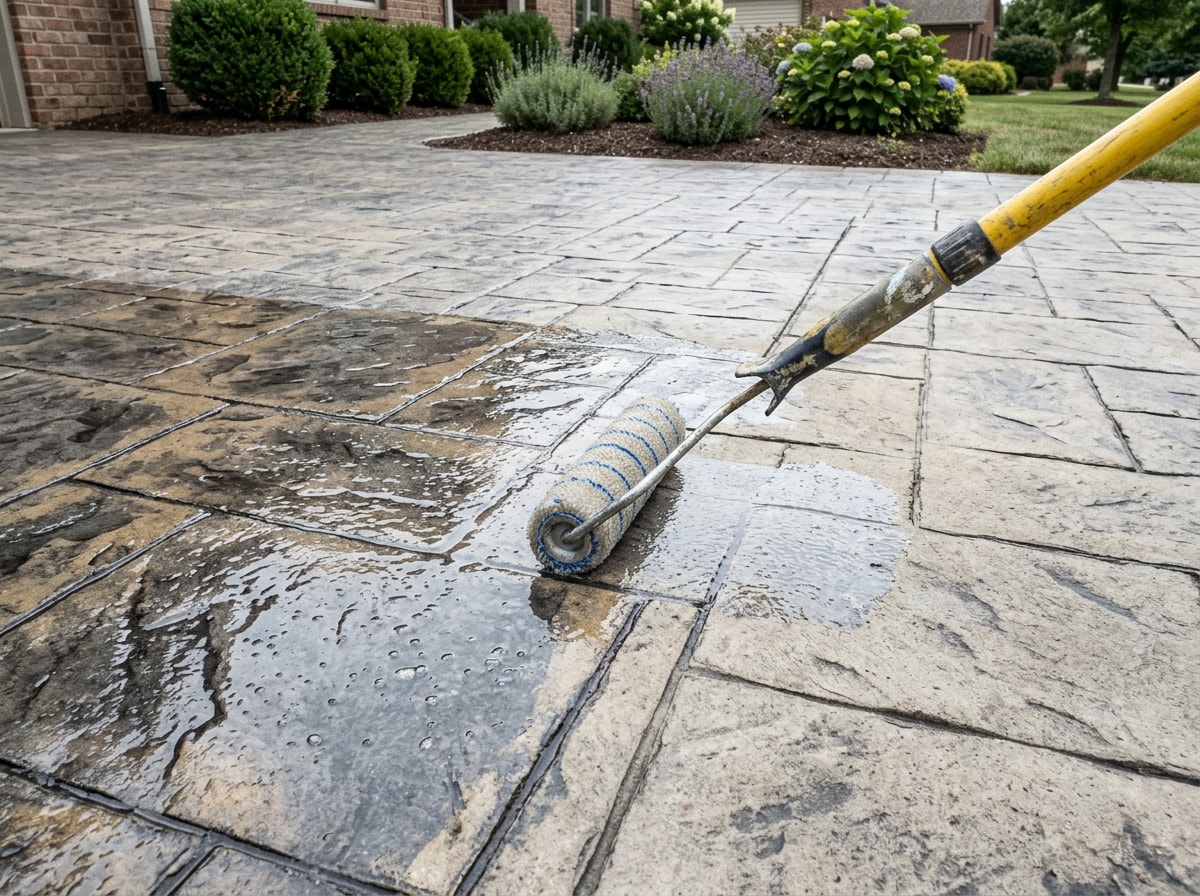
Step 4: Apply the Sealer in Two Thin Coats
Use a 3/8-inch nap roller, or an airless sprayer for larger areas, and apply two thin coats rather than one thick one. This "thin to win" approach isn't just a tip, it's the industry standard: the Decorative Concrete Council's sealer selection guide was developed specifically because sealer problems can ruin an otherwise flawless decorative concrete installation when applied too heavily or without following coverage rates. If you're weighing whether to rent a sprayer or hire it out, our guide to concrete sprayer equipment and pro alternatives breaks down the tradeoffs.
Common Mistakes That Ruin a Reseal Job
- Using a generic hardware-store sealer instead of a product formulated for decorative, textured concrete. The wrong sealer can peel, yellow, or trap moisture underneath.
- Sealing over a surface that isn't fully dry. This almost always leads to a cloudy or bubbled finish that has to be stripped and redone.
- Mixing sealer types between coats. Reapplying a different chemistry than what's already on the slab can cause the new coat to cloud or fail to bond.
Both of the first two errors are avoidable with patience and the right product. If a reseal has already gone wrong, our project gallery shows examples of resurfacing work we've corrected across the area.
Maintaining Your Sealed Stamped Concrete
Routine care is simple:
- Sweep regularly and wash with mild dish soap, water, and a push broom rather than harsh degreasers or acidic cleaners.
- Avoid deicing salts in winter, since they degrade sealer film over time.
- Do a quick seasonal inspection for dull spots, peeling, or bare patches before they turn into a full resurfacing job.
FAQ
How do I know when stamped concrete needs to be resealed?
Run the water-bead test. If water soaks in instead of beading, or the surface looks dull and chalky, it's time to reseal. Don't rely on the calendar alone, condition matters more than age.
How many coats of sealer should be applied to stamped concrete?
Two thin coats, applied after the first coat is tack-free. Two thin coats bond and cure more evenly than one heavy coat, which is prone to clouding and peeling.
Can I pressure wash stamped concrete before sealing it?
Yes, with a fan-tip nozzle held 12 to 18 inches from the surface. Skip turbo nozzles, they spin aggressively enough to strip or scar the stamped texture.
How soon after pouring can new stamped concrete be sealed?
Conventional concrete needs about 7 days of curing above 40°F, or 3 days for high-early-strength concrete at 73°F or higher, before sealing, and the slab should then dry for 12 to 24 hours. Many installers wait closer to 28 days on residential jobs to be safe.
How long does stamped concrete sealer take to dry or cure?
Most sealers are tack-free within a few hours but need 24 to 48 hours before foot traffic and longer before vehicles or heavy use.
Do I really need to reseal every 2 to 3 years, or can it wait longer?
It depends on the surface, not a fixed schedule. Industry best-practice guidance now recommends resealing on an as-needed basis, triggered by a failed water-bead test or fading color, rather than a strict every-two-years rule.
What is the best sealer for stamped concrete?
There's no single "best" option. Solvent-based acrylic gives a richer wet-look finish; water-based suits lower-odor needs. See the comparison table above, or request a free estimate for a product recommendation specific to your surface.
Ready to get your stamped concrete sealed right the first time? Contact Ward Contracting for a free estimate, or visit our homepage to see the full range of paving and concrete services we provide across Pineville and the greater Charlotte area.