A concrete rake in Huntersville, NC is the first tool to touch fresh concrete, long before a screed or float gets anywhere near the slab. Contractors call it a come-along or placer, and how someone handles it on pour day decides whether a driveway or patio finishes flat or fights the crew the whole way. Our paving and retaining wall crews see the difference a clean rake pass makes on every flatwork tie-in we pour around Mecklenburg County.
What Is a Concrete Rake?
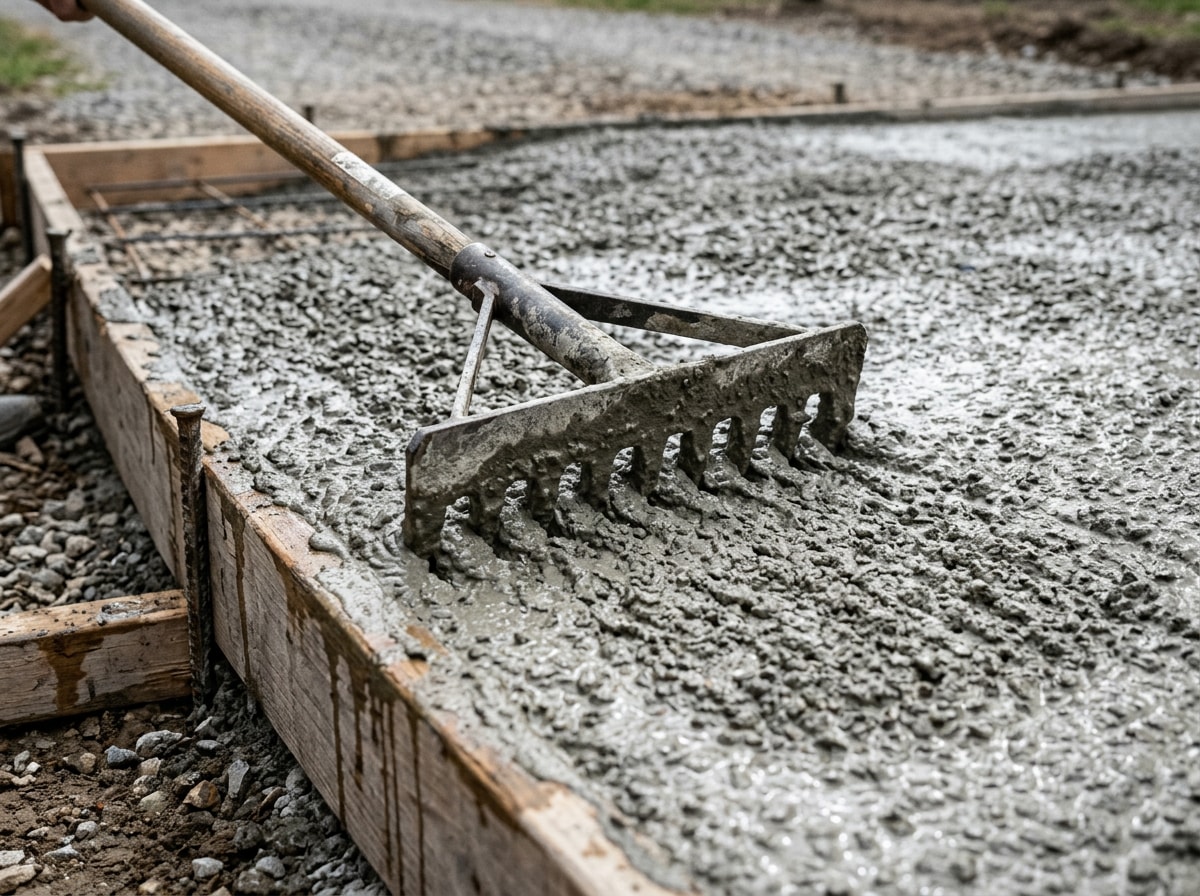
A concrete rake is a long-handled tool with a flat, toothed head. Crews use it to spread, pull, and level fresh concrete right after it leaves the truck chute.
You'll also hear it called a come-along or concrete placer, depending on the region and the contractor. Before anyone picks up a screed or a float, someone is already dragging a rake through the mix.
Knowing what the tool does helps homeowners understand what they're paying for on a driveway, patio, or sidewalk pour. It also gives DIYers a real shot at a flat, even slab instead of a lumpy one.
Types of Concrete Rakes
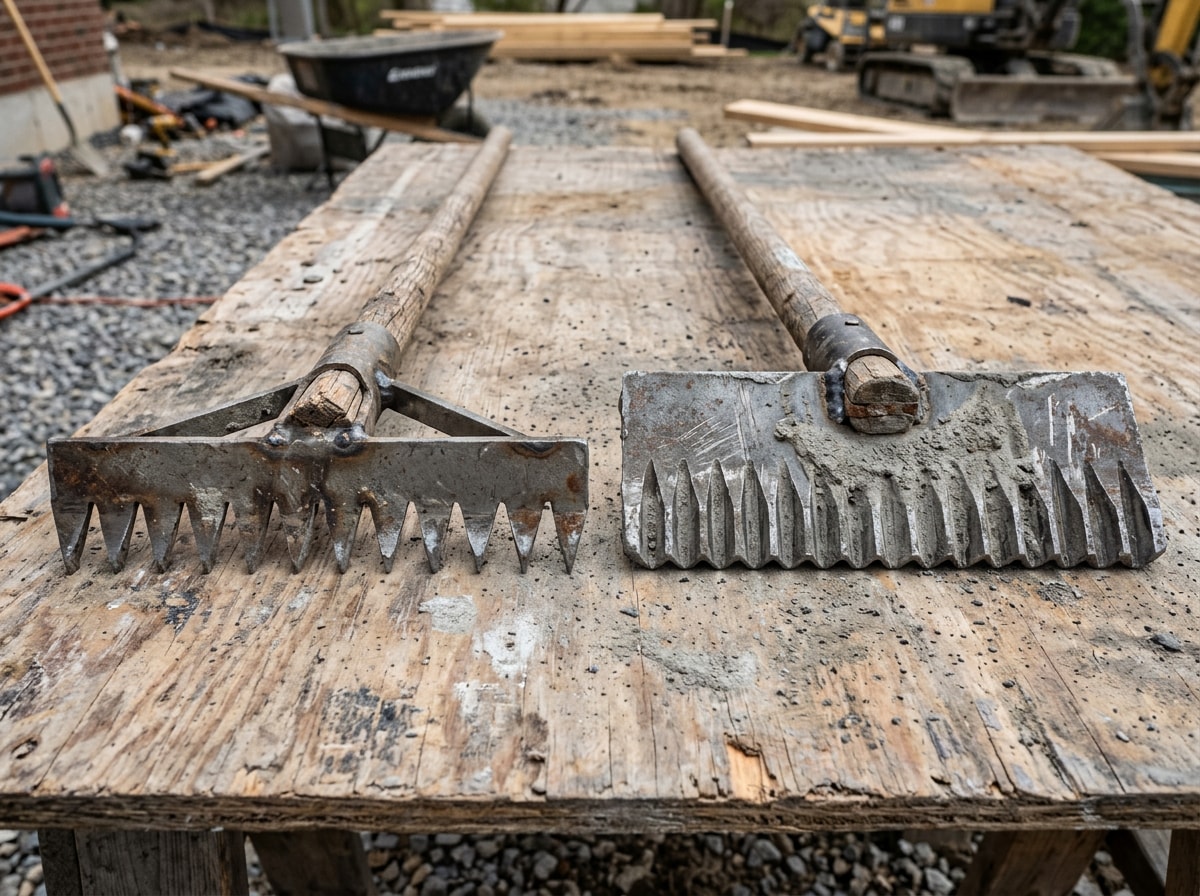
Not every concrete rake is built the same. The two most common styles on a residential jobsite are the flat toothed rake and the steel concrete rake.
Flat Toothed Rake
A flat toothed rake has a flat edge lined with sharp teeth, which helps grip heavy, wet concrete without the material sliding off the head. This design spreads concrete evenly across a form before any finishing work starts. The teeth also break up clumps as material gets distributed, keeping the surface more consistent once it's time to screed.
Steel Concrete Rake
The steel concrete rake is the type most crews reach for, and for good reason. Its heavy-duty steel blade handles repeated use and stays stiff enough to push and pull wet concrete without bending under load. Some steel rakes come with grooved or textured heads for decorative work, but a basic flat-blade version covers most standard driveway and patio pours.
Don't Reach for a Garden Rake
Skip the landscape rake already sitting in the shed. Pulling wet concrete with a steel landscape rake will segregate the aggregate, seriously reducing the strength of the concrete . Stick with a purpose-built concrete rake or come-along on anything structural, including a driveway slab that has to carry a vehicle's weight.
How to Use a Concrete Rake in Huntersville, NC
Using a concrete rake well comes down to two things: knowing what the tool is for, and developing a feel for the technique.
The primary job of a concrete rake is spreading freshly poured concrete across a form before any finishing tools come into play. Once the material is roughly in place, the same rake pulls excess concrete into low spots and pushes it toward edges and corners. The angled blade also lets a worker puddle concrete along form boards and around embedded objects like drain pipes or anchor bolts, which helps avoid voids once the slab cures.
Technique matters more than muscle:
- Angle the rake head at roughly 45 degrees and pull it toward you in smooth, controlled strokes.
- Let the teeth guide the concrete instead of fighting the material.
- Stand with feet shoulder-width apart and use body weight, not just arm strength, for better control and less fatigue.
- Work side to side in wide, flat pours like driveways.
- Make shorter, more frequent passes on sloped pours or narrow sidewalks to avoid pushing material downhill before it can be screeded.
Mecklenburg County's clay-heavy subgrade is typical across the Piedmont, and summer heat can shorten the window before a mix starts to stiffen. Crews who rake fast and screed right behind themselves lose a lot less time to that clock.
If a DIY pour already has you second-guessing your subgrade or your timeline, our team handles driveway paving projects across Huntersville and can get you a straightforward estimate before you buy a single bag of ready-mix.
The Basic Concrete Pouring and Finishing Process
A concrete rake is just one step in a longer sequence. The basic order looks like this:
- Prep the subbase. Many crews use the same rake before the pour to spread and roughly level the gravel subbase, just enough for a screed to handle final strike-off without extra work. This is also where site preparation and base installation make or break everything poured on top.
- Place and rake the concrete. Crews place and roughly distribute the mix with a rake or come-along as soon as it hits the forms.
- Screed. A straightedge strikes off the surface to bring it to the correct height.
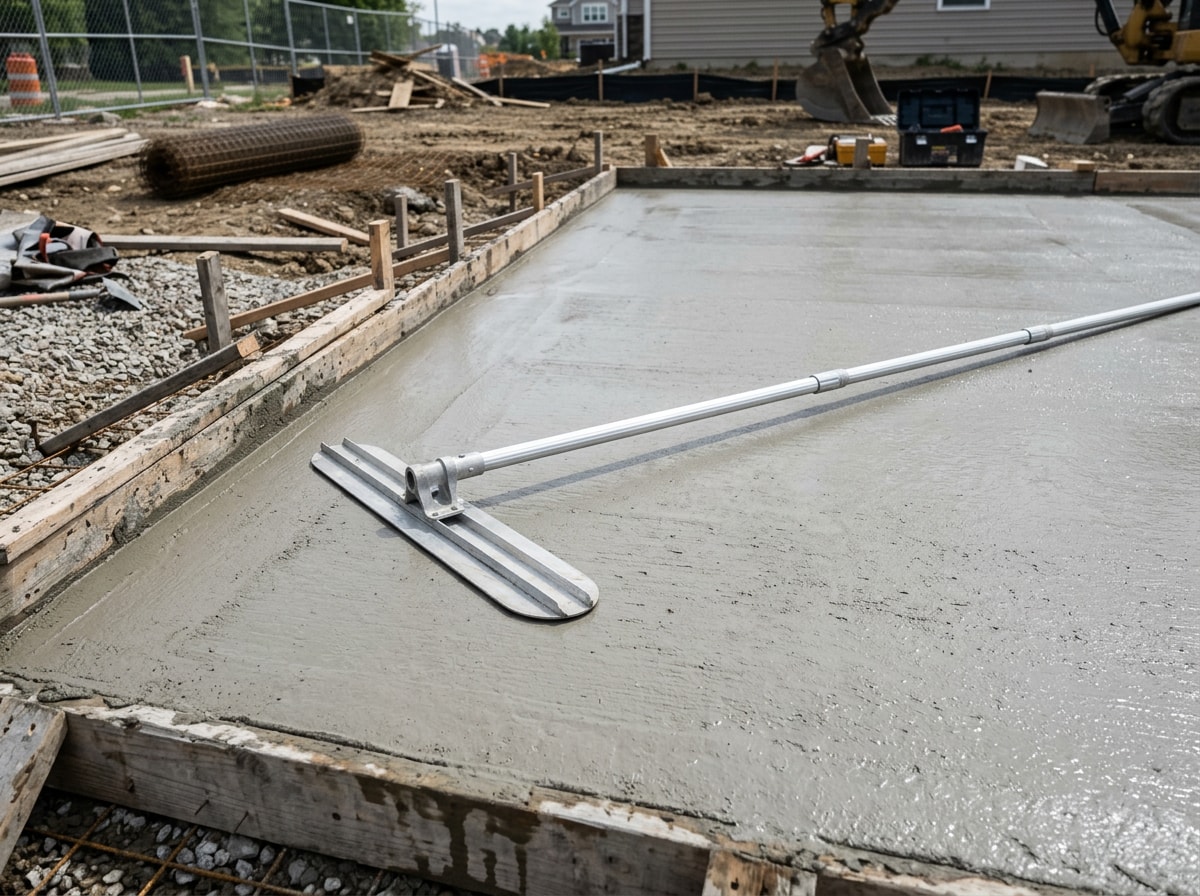
- Bull float. This smooths the main area right after screeding.
- Hand float. A magnesium hand float works tighter spots around forms and obstacles.
- Wait for bleed water.
Wait until the bleed water disappears from the surface before starting finishing operations , per NRMCA guidance on flatwork finishing.
- Edge, cure, and finish. The slab is edged, left to firm up, and cured before any final texture goes down.
Finishing Tools at a Glance
| Tool | Stage of the Pour | Primary Job |
|---|---|---|
| Concrete rake / come-along | Immediately after placement | Spread and rough-level the wet mix |
| Screed | Right after raking | Strike off concrete to form height |
| Bull float | After screeding | Smooth the main slab surface |
| Magnesium hand float | After bull floating | Finish tight spots near forms and edges |
| Edger | Once the slab firms up | Round edges and prevent chipping |
| Broom | Final step | Add slip-resistant texture |
What Is a Concrete Broom?
A concrete broom has a long handle and wide head much like a rake, but it works at the opposite end of the job. Crews drag it across a screeded and floated slab to create a textured, patterned broom finish. That texture isn't just cosmetic. It makes the finished surface noticeably grippier for walking and driving, which matters most on driveways, walkways, and ramps.
Keeping Your Concrete Tools Clean
Every concrete tool, including a rake, needs cleaning before the material hardens on it. Rinse the rake head immediately after use rather than setting it aside for later. Letting wet concrete dry on a steel blade causes pitting and rust over time, which weakens the tool and shortens its working life.
Dry tools fully before storage, too. Damp steel left in a shed or garage corrodes faster than tools stored clean and dry.
Handling wet concrete also comes with real safety considerations. Fresh concrete and dust from cutting or grinding cured slabs both carry hazards, and OSHA's Respirable Crystalline Silica standard for construction requires employers to limit worker exposures to respirable crystalline silica and take other steps to protect workers . Gloves, eye protection, and a quick rinse after every pour go a long way for a DIYer, too.
For general background on the hand tools used across a typical pour, the Fine Homebuilding guide to concrete tools is a solid reference, and NRMCA's flatwork finishing sheet covers the timing details in more depth.
Want to see this kind of work finished instead of guessed at? Browse recent paving and retaining wall projects from Ward Contracting Inc., or visit our homepage to see the full range of services we run across the Charlotte metro. For a related read on getting a driveway or patio slab right from the ground up, check out our guide on concrete casting in Cornelius, NC.
If you're in Huntersville or anywhere in Mecklenburg County and would rather hand the whole pour to a crew that does this daily, request an estimate and we'll walk the site with you before anything gets mixed.
FAQ
What is a concrete rake used for?
A concrete rake is used for moving, spreading, and leveling freshly poured concrete before it's screeded and floated. It's usually the first tool to touch the mix once it leaves the truck.
What is the hook on a concrete rake for?
Many concrete rakes have a hook on the back of the blade to help lift rebar or mesh into position before the concrete begins to harden . Flipping the rake over lets the hook catch the mesh and pull it back toward the correct height within the slab.
Can I use a garden rake to spread concrete?
No. A steel landscape rake can segregate the aggregate in wet concrete and weaken the slab. Use a purpose-built concrete rake or come-along instead, especially on anything load-bearing like a driveway.
What's the difference between a concrete rake and a screed?
A rake does the rough work first, spreading and roughly leveling concrete right after it's placed. A screed comes next and strikes the surface off to the exact finished height. They're separate tools for separate stages, not interchangeable.
What size concrete rake should I buy?
A larger rake covers wide work areas faster, which speeds up flattening on big pours like driveways. A smaller rake offers more control in tight spots, such as around forms, steps, or narrow walkways.
What tool is used to spread wet concrete?
A concrete rake, come-along, or concrete placer is used to push and pull wet concrete into position before screeding begins. All three terms describe essentially the same tool.