Cementos (concrete) pricing in the Greater Charlotte Area, NC runs higher than most national averages because of clay soil, humidity, and regional labor rates. If you're comparing bids right now, you need to know what's a fair number and what's padded. This guide breaks slab, foundation, and driveway pricing into real ranges so you can read a quote with confidence.
How Much Does a New Concrete Slab Cost in the Greater Charlotte Area, NC? [2026 Data]
Homeowners pay between $5 and $11 per square foot for the cost of a concrete slab in Charlotte, NC. That means a 10x10 pour runs roughly $500 to $1,100, while a 20x20 slab typically lands between $2,000 and $4,400 installed.
Occasional freeze-thaw cycles and high humidity in Charlotte, NC, require additives and reinforcements, which can raise the price. Clay-heavy soil across the region also means extra prep work isn't optional in many yards.
A few factors push cementos quotes up or down within that range:
- Thickness — standard 4-inch slabs cost less than 6-inch slabs built for heavier loads
- Finish — a basic broom finish is cheaper than stamped or decorative concrete
- Reinforcement — rebar or wire mesh adds material and labor cost
- Site access — tight lots or long pump-truck runs increase labor time
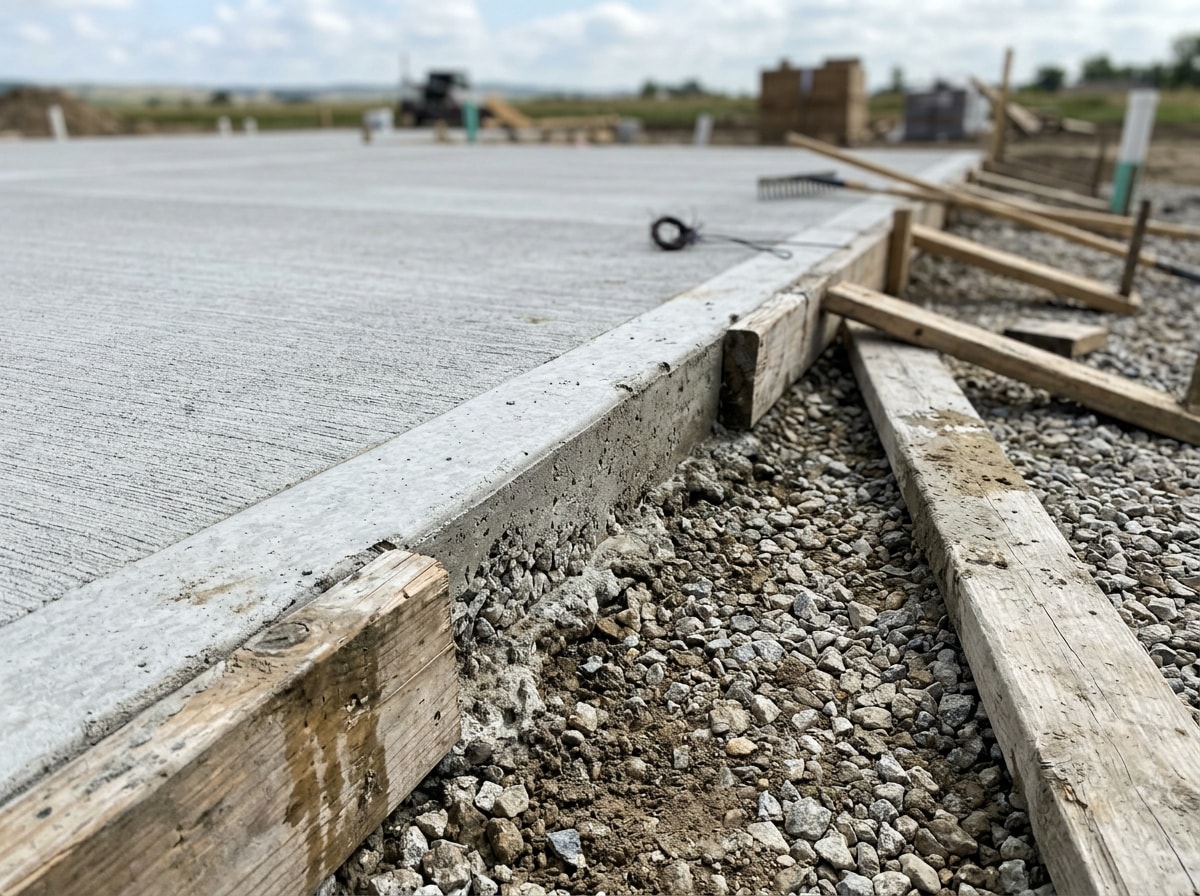
For a fuller look at how site work and paving crews handle slab-adjacent projects, see our paving contractor services and residential paving pages.
Concrete Foundation Cost in the Greater Charlotte Area, NC
Foundation work costs more than a standalone slab because it carries structural requirements a patio or driveway never faces. Homeowners in Charlotte, NC typically pay $7,424–$21,540 total for a slab foundation (800–1,200 sq ft), or $9.28–$17.95 per sq ft installed.
At $9.28–$17.95/SF, Charlotte is an above-average cost market for concrete foundation, ranking 25th of 30 tracked metros, 14% above the dataset median of $8.16/SF. That premium mostly reflects soil correction and regional labor rates rather than material cost alone.
That soil factor isn't marketing talk. Much of the Charlotte metro sits on Piedmont clay subsoil, and subsoil in the piedmont region has high clay content that tends to have slow water movement and may remain wet for long periods of time , according to NC State Extension. Crews grading sites and placing base material across Mecklenball County see this same clay on nearly every slab, driveway, and footing job, which is why subgrade correction shows up as a line item on almost every local bid.
Concrete vs. Alternative Foundation Types
No single source combines slab, foundation, driveway, and alternative foundation types into one view, so here's a side-by-side look using 2026 figures from across this guide.
| Project Type | Typical Cost (per sq ft) | Typical Lifespan |
|---|---|---|
| Concrete slab (patio/general) | $5–$11 | 25–30+ years |
| Slab foundation | $9.28–$17.95 | 50+ years |
| Concrete driveway | $6–$10 | 25–30 years |
| Crawlspace foundation | ~$8–$15 | 30–50 years, more moisture-prone |
| Basement foundation | ~$18–$30 | 50+ years, highest upfront cost |
| Pier-and-beam | ~$7–$12 | 40–60 years, common on sloped lots |
These alternative-foundation figures vary widely by lot grading and labor availability, so treat them as planning ranges rather than fixed quotes. For slopes or retaining needs around a foundation, our retaining wall installation and erosion control walls pages cover how site grading ties into long-term drainage.
How Much Does a Concrete Driveway Cost in the Greater Charlotte Area, NC?
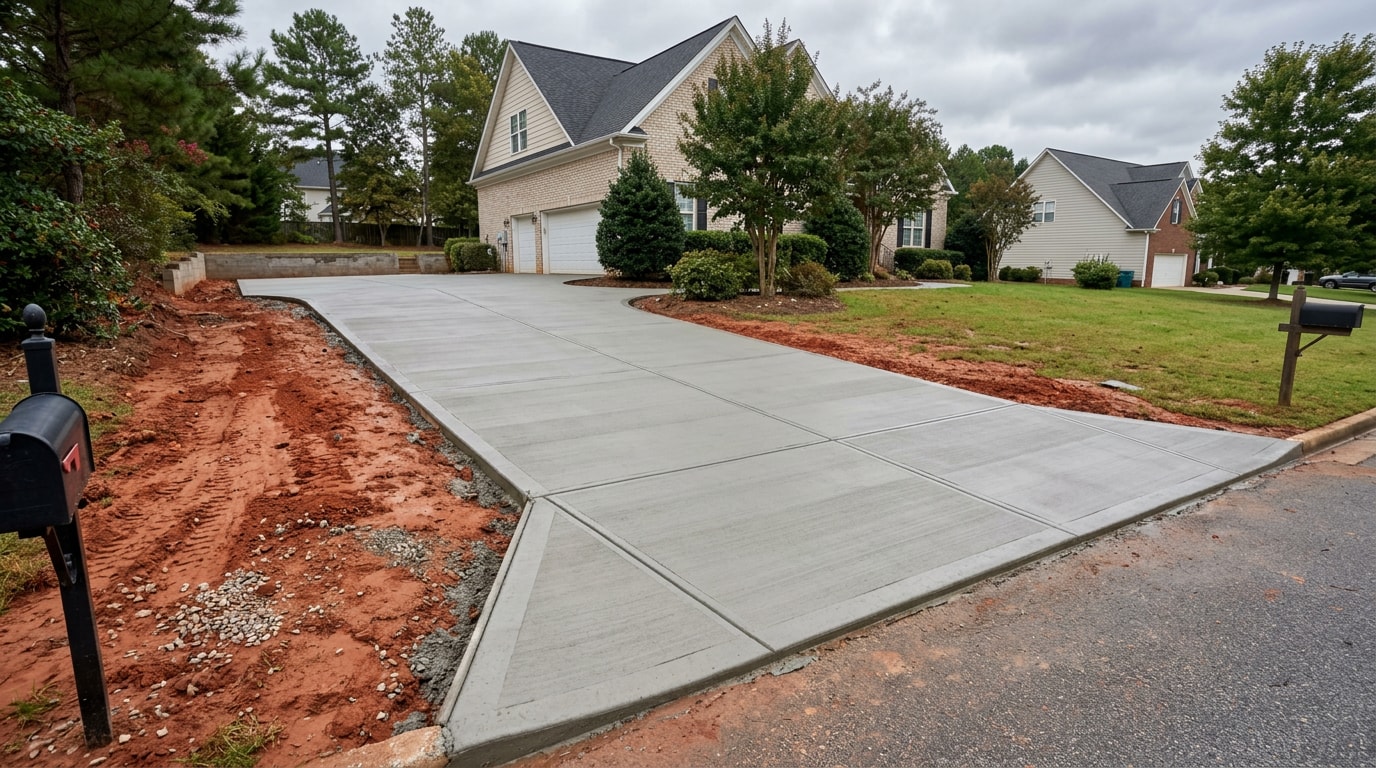
Concrete driveway pricing in the Charlotte area generally falls between $6 and $10 per square foot for un-reinforced concrete, not including demolition of an existing driveway. That's the figure most homeowners see on a first estimate.
Reinforced driveways, meaning concrete poured with rebar or wire mesh embedded inside, cost more upfront. They also hold up better against heavier vehicles and shifting soil. The difference comes down to added material and labor, not a different product.
See current options on our driveway paving page, or browse the asphalt contractor category for alternatives if concrete isn't the right fit for every area of your property.
Factors That Move Driveway Pricing
- Square footage — larger driveways lower the per-foot rate slightly but raise total cost
- Reinforcement — rebar or mesh adds strength and price
- Thickness — most driveways run 4 inches, but heavier vehicles may need more
- Finish — broom finish costs less than stamped or exposed-aggregate styles
- Demolition — removing an existing driveway typically adds $2 to $4 per square foot as a separate line item
Step-by-Step: How a Concrete Slab Gets Installed
Understanding the install sequence explains why pricing varies so much between contractors. A professional slab generally follows five stages:
- Site assessment and grading — the crew checks drainage and grades the pad
- Subgrade stabilization — compacting soil and adding gravel to prevent future settling
- Reinforcement — rebar or wire mesh placed before the pour
- Pour and finish — concrete is placed, screeded, and finished while workable
- Curing — the slab is protected and kept moist as it gains strength
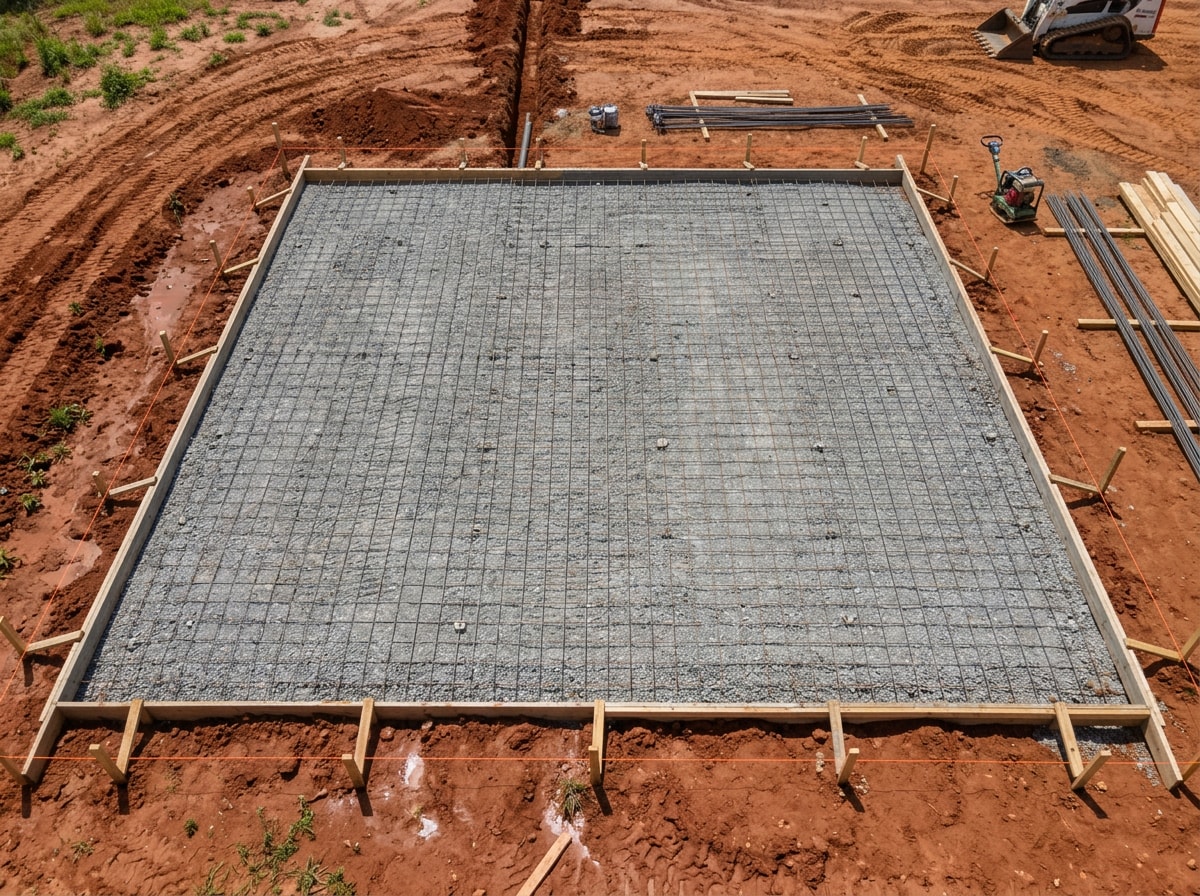
Skipping step two is the single most common reason slabs crack or settle early on Charlotte-area clay. Our site preparation and base installation teams handle exactly this groundwork before any slab, driveway, or parking area goes in.
Concrete reaches an early set and light-use planning window in about 24 to 48 hours and achieves full curing strength at the 28-day benchmark.
NRMCA states that concrete in a dry environment can lose as much as 50 percent of its potential strength compared with similar concrete that is moist cured , which is why proper curing matters as much as the pour itself.
If you're also weighing concrete against hydraulic mixes for a specific application, our companion guide on concreto hidráulico en el Greater Charlotte Area breaks down cost and lifespan differences in more detail.
Ready to put real numbers against your project instead of guessing? Request an estimate and a crew will walk the site before quoting anything.
FAQ
Do I Need a Vapor Barrier Under a Concrete Slab Foundation in Charlotte?
Most Charlotte-area slab foundations need a vapor barrier because the region's clay soil and humidity push moisture upward into the concrete, which can damage flooring and encourage mold over time. A minimum 10-mil vapor retarder conforming to ASTM E1745 Class A requirements is required between the concrete floor slab and the base course under the current International Residential Code , with limited exceptions for garages and unheated flatwork.
How Thick Should a Concrete Slab or Driveway Be in the Charlotte Area?
Residential foundation slabs are typically poured at 4 to 6 inches thick, depending on load requirements. Driveways generally use 4 inches for standard vehicles and closer to 5–6 inches if trucks or RVs park there regularly.
How Long Does a Concrete Slab Foundation Last?
A properly reinforced concrete slab foundation can last 50 years or longer, assuming adequate soil prep and drainage were part of the original installation. Skipping subgrade stabilization, the step covered above, is the most common reason foundations fail early in this region.
How Much Does Concrete Slab Demolition Cost in Charlotte?
Removing old concrete before a new pour typically adds $2 to $4 per square foot, depending on slab thickness and whether reinforcement needs to be cut out. Disposal fees can add to that total depending on volume.
How Does Charlotte Concrete Pricing Compare to the National Average?
Charlotte concrete pricing runs above the national average, largely due to soil correction needs and regional labor costs. Charlotte ranks 25th of 30 tracked metros, 14% above the dataset median for installed foundation cost per square foot.
What's the Difference Between Labor and Material Costs in a Quote?
Material (the ready-mix concrete itself) is usually the smaller line item. Labor, which covers grading, forming, placing, and finishing, typically makes up the larger share of a quote, especially on clay-heavy lots that need extra subgrade work before the pour.
How Much Is a Cubic Yard of Concrete in the Greater Charlotte Area?
Ready-mix material pricing varies by plant and order size, and quotes change often. Ask your contractor for the current per-yard rate at the time of your pour rather than relying on a published average, since delivery minimums and fuel surcharges can shift the number.
---
About the author: This guide was prepared by the Ward Contracting Inc. project estimating team, which grades, bases, and paves sites across the Greater Charlotte Area, NC, including Huntersville, Mooresville, and Mecklenburg County. Questions about a specific site? Contact Ward Contracting Inc. or browse completed projects to see recent site work. Visit the homepage for a full list of services across the region.